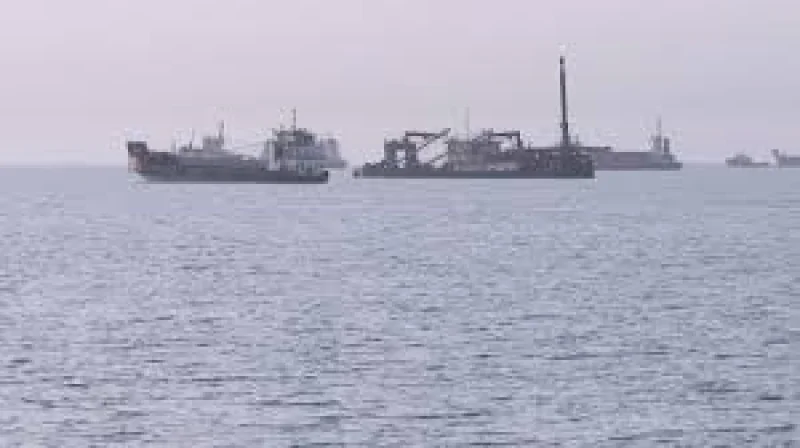
The U.S. military on Sept. 6, 2026, rejected Iran’s claim that it struck an unmanned American military vessel in the Strait of Hormuz, with Tim Hawkins calling it “a total lie.” Iran had said its forces hit a U.S. vessel that was trying to enter an area Tehran says is restricted in the waterway.
The denial landed just a day after the U.S. said it struck Iranian oil tankers in retaliation for Iran launching ballistic missiles at Navy warships. That sequence matters because the latest claim and counterclaim are not isolated; they come as Strait Of Hormuz Military Clashes have resumed after roughly a month of quiet and the sea lane has again become a test of how far each side is willing to push.
Hawkins’ response went straight at the heart of Iran’s account. If the vessel was unmanned, as Tehran said, there was still no independent verification in the public record of what was struck or whether a strike occurred at all. That gap leaves the competing versions floating against each other, with each side describing the same moment in completely different terms.

The Strait of Hormuz has been treated as a pressure point throughout this wider confrontation. The war began with U.S. and Israeli attacks on Iran on Feb. 28, and negotiations collapsed after a ceasefire agreement was announced in June. Since then, Iran’s parliament speaker and chief negotiator, Mohammad Bagher Qalibaf, has said the era of “proportionate responses” is over and that retaliation will be “faster, heavier and more painful.”
Tehran is also preparing to tighten the picture further. Mohsen Rezaei, the new head of Iran’s Supreme National Security Council, said the country plans to announce an “exclusion zone” outside the Strait of Hormuz in the coming days and weeks for vessels it believes are trying to transit the waterway. He said the zone would begin from the line of the U.S. naval blockade, extend toward the Strait of Hormuz, and continue into the Persian Gulf.
That makes the latest exchange more than a maritime argument over one vessel. It is a warning that the next confrontation may be defined not by a single strike, but by who gets to control movement through one of the world’s most strategic choke points.