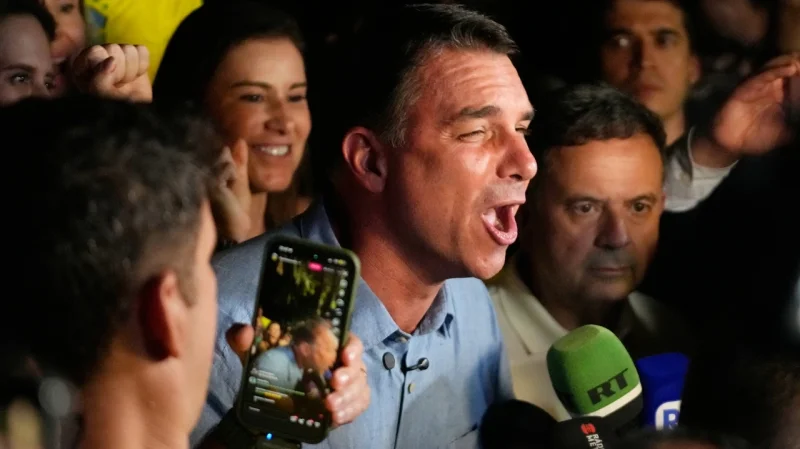
Brazil’s first-round presidential vote closed on Sunday, and late partial results put Flávio Bolsonaro ahead of Luiz Inácio Lula da Silva as the contest headed toward a possible runoff on 25 October. With results in from almost 65% of the country, Bolsonaro had 49.8% to Lula’s 42.25%.
The numbers matter because a candidate needs 50% plus one vote to avoid a second round, and Bolsonaro was still short of that threshold even with the lead. Lula, seeking a fourth non-consecutive term, was watching a race that remained close enough to turn on the final count, but far enough along to show how difficult it would be for either side to claim an immediate win.

The election itself has been cast as one of the most polarized in Brazil’s recent history, with the outcome expected to shape the country’s political direction and carry consequences beyond its borders. Lula voted in São Bernardo do Campo on Sunday morning, while Bolsonaro cast his ballot in Rio de Janeiro’s north zone and struck an upbeat tone, saying internal polling showed voters who had backed other anti-Lula candidates moving his way. He said he hoped that would be enough to deliver victory in the first round.
That confidence ran into a sharper message from Lula, who framed the choice as one between “strengthening democracy and barbarism” and said the only poll that mattered would be the one carried out that day. The contrast was plain on the ballot line, too. Jair Bolsonaro chose his eldest son as the candidate after polls earlier in the year suggested supporters might have preferred Tarcísio de Freitas or Michelle Bolsonaro, a sign that the right was settling on a fallback rather than a first choice.
For voters like Claudinei Ferreira Viana, that calculation was exactly the point. He said his first choice would have been Jair Bolsonaro, but with no other rightwing candidate strong enough to take on the current president, he was backing Flávio instead. In a race this tight, the difference between a lead and a victory is only a handful of votes beyond 50%, and that is why every new count changes the stakes. If Bolsonaro does not cross that line, Brazil goes to a runoff on 25 October, and the first round will end not with a winner, but with a second fight for the country’s future.