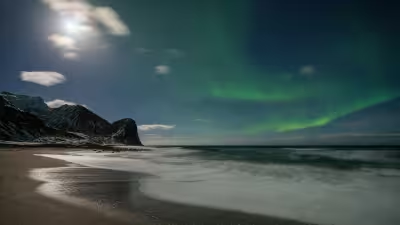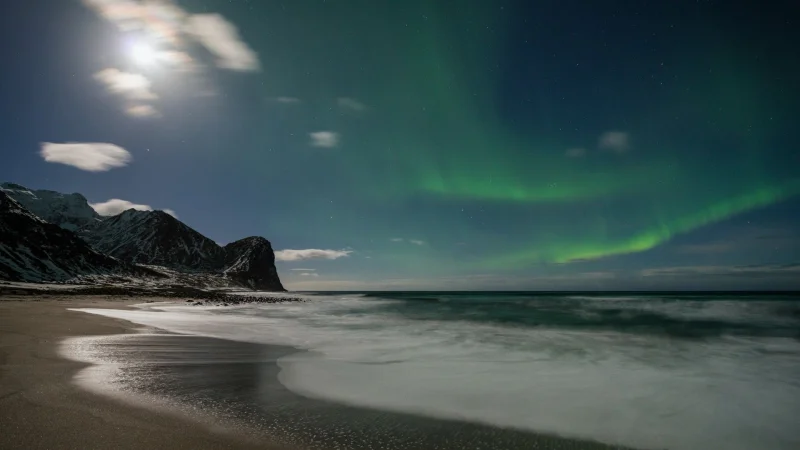
Noaa's Space Weather Prediction Center has issued a G1 minor geomagnetic storm watch as a coronal hole high speed stream was expected to reach Earth overnight tonight, setting up a short-lived Northern Lights watch for parts of Canada through Thursday morning. The forecast arrival was around 11 p.m. EDT, with increased aurora activity likely to last until 5 a.m. EDT tomorrow.
That timing matters because people in parts of Canada have a narrow window to catch the display, and the best viewing was expected in the central Prairies. In Manitoba, the most favorable stretch was 10 p.m. through 4 a.m. CDT, while Saskatchewan and Alberta were expected to have their best chance from 9 p.m. through 3 a.m. MDT/CST. Clear skies would help, and the lights could appear any time after darkness settles in.
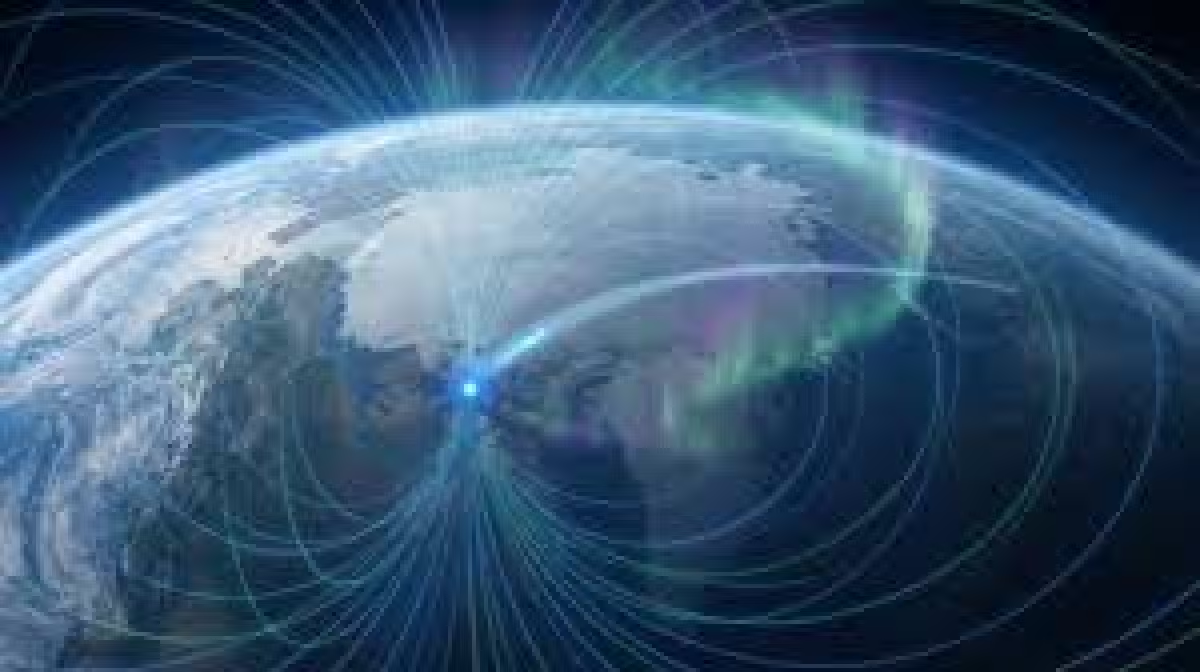
The setup comes from two large gaps in the solar corona that have been tracked over the past week. Those gaps are coronal holes, and they send fast streams of particles into the solar system. When a coronal hole high speed stream sweeps past Earth, it can stir Earth's magnetic field enough to spark auroras that reach farther south than usual, especially when the sky is dark and the timing lines up near local midnight, when the aurora oval tends to be centered and the most active displays often appear.
There is one wrinkle. G1 geomagnetic storms usually keep Northern Lights displays farther north in the eastern half of the country, yet the strongest forecast for this event points to the central Prairies. That mismatch is why the window may be better than the storm level sounds, but also why the display is not guaranteed to spread evenly across Canada. Aurora displays can also be boosted at this time of year by equinox cracks, a seasonal effect that can help the solar wind couple more efficiently with Earth's magnetic field.
For people hoping to see the Aurora Borealis, this is the kind of forecast that rewards patience and a dark horizon. Quiet arcs often come first in the evening, then the show can turn more active around local midnight before fading into patchier light by early morning. The next confirmed milestone is the stream's arrival around 11 p.m. EDT tonight, and how bright the sky gets after that will decide whether the watch becomes a brief glow or a more memorable display.