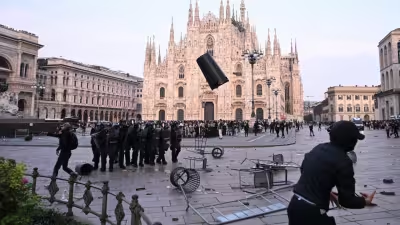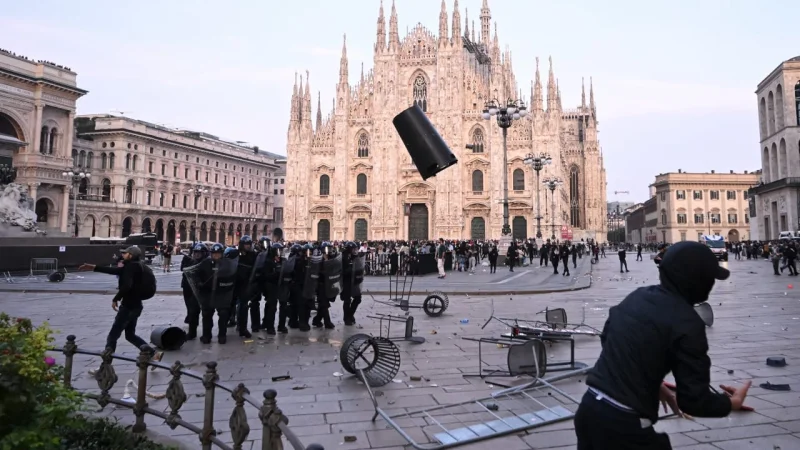
Italian police fired tear gas in Milan on Saturday after protesters threw stones in the square in front of Milan's Gothic cathedral, turning a cost-of-living demonstration into a street clash in the city's busiest central area. Police in riot gear also moved to clear hooded protesters from the Galleria Vittorio Emanuele II as the confrontation spread through the square and nearby streets.
The violence forced shops in central Milan to pull down their shutters, sent tourists fleeing the area and led to the closure of the Duomo metro station during the clashes. Several people were reported injured and arrests were made, though authorities did not immediately say how many people were hurt or what charges, if any, would follow.

The unrest matters because it came on Saturday, when protests over the cost of living were already drawing attention in Milan and Bologna, and because the violence broke away from the main march rather than defining it. In Bologna, police used a water cannon to disperse crowds and made seven arrests after the protest became violent.
Italian Prime Minister Giorgia Meloni condemned the violence, writing on X that demonstrating is a right, but turning cities into battlegrounds is not. Her message drew a hard line between protest and disorder, while leaving the central question unanswered: whether the arrests in Milan and the damage in both cities will lead to more police action or more demonstrations.
The clashes also echoed unrest in neighboring France, where protests have centered on rising costs and declining public services, but the immediate focus in Italy is on the scenes that unfolded around Milan's cathedral square and whether the protests can stay peaceful next time.