


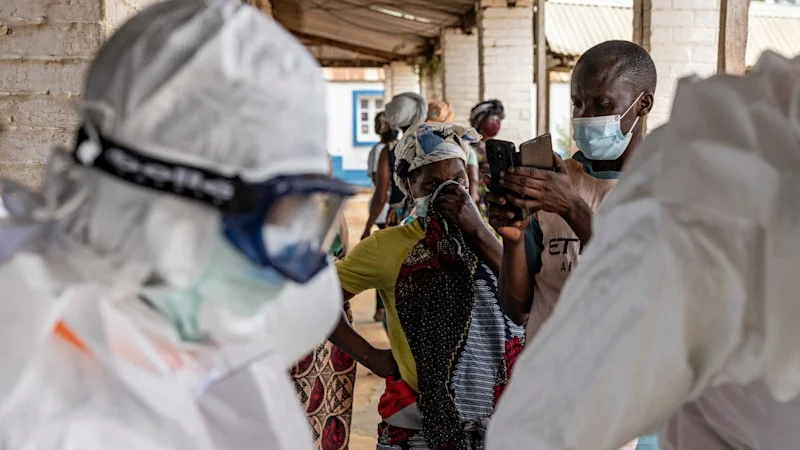
Victoria’s Ebola response plan was tested for the first time on Tuesday after a man with symptoms arrived at Monash Medical Centre and was moved by ambulance to the Royal Melbourne Hospital that evening. He was later cleared of Ebola and discharged on Wednesday.
The case is the reason Ebola Melbourne is being searched now: it put the state’s emergency arrangements into motion, from ambulance transfer to isolation in a negative-pressure room in intensive care, and it prompted hospitals to prepare for a disease that has not been detected in the patient after all. Chris MacIsaac said the program put in place passed its first real-life test after years of planning and practice, and that everything worked as expected. “Everything worked exactly as we thought it might and very fortunately the patient was cleared of Ebola,” he said.
The man had recently returned from an area near Uganda and the Democratic Republic of Congo, where the World Health Organisation said on Friday there were 906 suspected cases of Ebola and 223 related deaths, while Uganda had seven confirmed cases. In response, Victorian Chief Health Officer Dr Caroline McElnay issued an Ebola alert for clinicians on Friday, telling them to consider the disease in patients with fevers above 38 degrees who had travelled to an outbreak area or had contact with someone who was infected. McElnay said Ebola was a high-consequence disease with a high mortality rate, even as she stressed the risk in Australia was low and that the state was prepared.
That preparation had been visible before the patient even reached Royal Melbourne. The Health Department had already met with the Royal Melbourne and Royal Children’s hospitals just hours before the suspected case, after concern over the outbreak in central Africa prompted a fresh look at readiness. Health officials also ensured hospitals had personal protective equipment, while staff at the Victorian Infectious Diseases Reference Laboratory had received special training and scientists stocked the lab with the correct reagents for Ebola testing.
The friction in Victoria’s response is that the danger was treated as small, but the machinery of a full emergency response still had to be turned on. Testing was carried out in a high-containment laboratory housed in the Doherty Institute, the only facility in the state designed to test the high-risk pathogen, showing how quickly a suspected case can stretch a system built for rare events. Dr Katherine Bond sprang into action earlier this week when notified of the potential case, underscoring how the response depends on speed as much as preparation.
The patient’s negative result and Wednesday discharge will ease immediate concern, but health authorities are still assessing the response to see whether anything can be improved. For Victoria, the first live Ebola drill is over; the next question is whether the system that worked under pressure can be made sharper before the next alert arrives.
