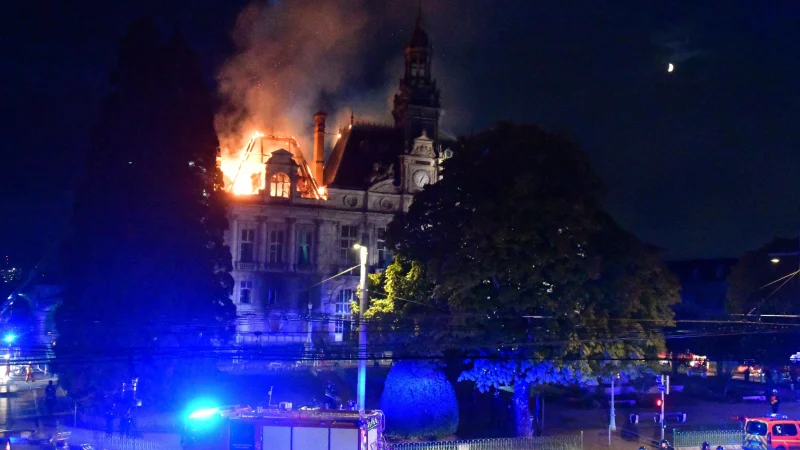
Limoges city hall was left in flames on October 17, and its bell tower collapsed during the demonstrations. The fire tore through a public building at the center of the city before the structure gave way.
That damage is why Limoges is being searched now: it turned a day of protests into a scene of destroyed civic property, with the collapse of the bell tower marking how severe the blaze became. Gérald Darmanin said on X that France had seen “des violences urbaines d'une gravité inouïe” and urged a very firm judicial response, including remand for those who attacked police officers, firefighters, public buildings and shops.

The violence was not treated as an isolated local episode. It came amid demonstrations across France on 17 October, and the reaction quickly moved from the street to politics and justice. Éric Zemmour posted a video on X saying the time for appeasement was over, that the state must restore order, and calling to repress, judge quickly and punish hard.
Olivier Faure took a different line, denouncing the scenes of urban violence as a shame while also warning that power cannot keep letting the social movement rot. He said the President should receive high school and university students, hear their proposals and fully review the budget plan. That split matters, because it shows the debate is not only about punishment: it is also about whether the unrest can still be answered politically before it hardens into something worse.
What remains unanswered is how the fire at Limoges city hall started and what exactly caused the bell tower to collapse. For now, the facts point to a public building badly damaged in a day of unrest that is already producing a hard judicial response and an argument over how France should answer the anger behind it.