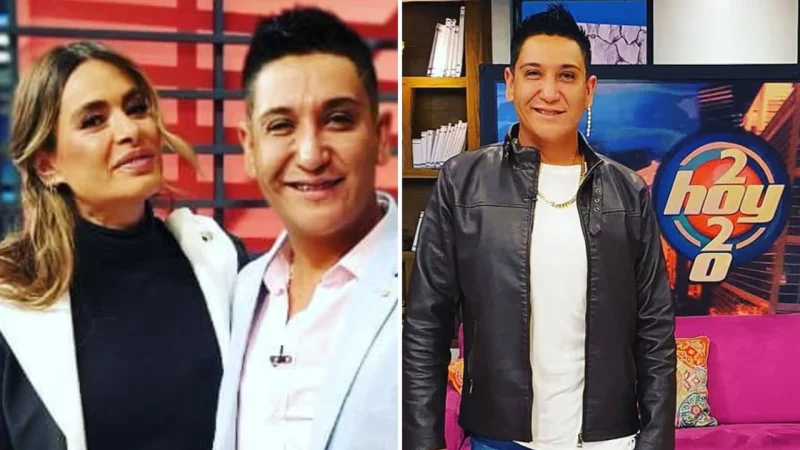
Farath Coronel was found dead inside his home in Cuautitlán Izcalli early Friday, and the death was confirmed publicly the same day by Dulce Gipsy on Instagram. She said he was “in the sky,” called him a friend, and asked for justice after the discovery of his body.
That confirmation is what pushed his name into wide circulation on August 4. Coronel was known as a collaborator on Hoy, Cuéntamelo Ya and ¡Qué Buena Hora!, so the news reached not only people who followed local safety updates but also viewers who knew him from television. Dulce Gipsy’s message made clear that this was not a distant public figure for her; she wrote that he was someone with whom she shared moments, conversations and memories, and asked people to pray for his eternal rest and for his family.

He was found without life on the floor of the house in Cuautitlán Izacalli, Estado de México, after emergency services evaluated him and determined he had no vital signs. Initial reports said he allegedly had three gunshot wounds to the skull, but those details remain part of the first versions of the case rather than a formal public ruling. The Comisaria General de Seguridad Ciudadana Cuautitlán Izcalli said the Policía Municipal responded to an auxiliary call that came through redes vecinales for a person apparently injured by a firearm, and authorities secured the area after the discovery.
That is where the reporting shifts from certainty to what has still not been pinned down. Farath Coronel’s death is confirmed, but the reported cause and the reported detention around the case are still being described in unofficial or early terms. Debate reported that one person may already have been detained, allegedly his escort, yet no formal public confirmation in the available material ties that person to the case or explains what evidence led to that account.
For now, the fact that matters most is the one that can no longer be reversed: Coronel is dead, and the public record around how he died is still catching up with the discovery in his home. What comes next is whether investigators formally state the cause of death and whether any detention becomes an arrest with a name, a charge and evidence that can be tested.