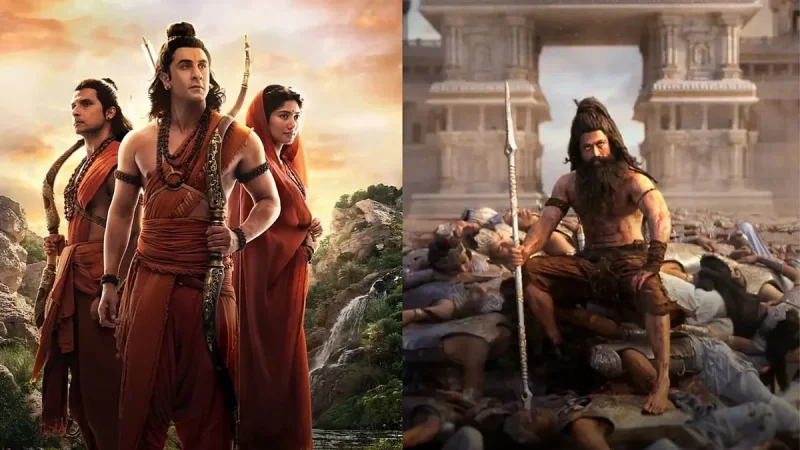
The makers of Ramayana: Rise of Legend have set its world premiere for the evening of October 27, 2026, at the David Geffen Theatre of the Academy Museum of Motion Pictures in Los Angeles. The invite-only screening will be shown in 3D and is being staged as the first public unveiling of the film to a global audience.
That timing matters because the film is still headed for theatres worldwide on November 5, 2026, with the first instalment due before the year’s end run-up turns into full release mode. Ranbir Kapoor, who plays Ram, anchors the project’s early public profile, alongside Sai Pallavi, Yash, Sunny Deol and Ravie Dubey, while Nitesh Tiwari directs the two-part saga.

Los Angeles gives the launch a wider international frame than a local premiere would. Organisers expect the auditorium to be filled to its maximum capacity of 945 guests, with Hollywood personalities, filmmakers, international journalists and other members of the film fraternity on the list. Invitees have also been asked to wear traditional Indian festive wear for the red carpet, a signal that the production wants the night to look as much like a cultural presentation as a film screening.
The scale behind that presentation is unusually large. Ramayana is produced by Namit Malhotra's Prime Focus Studios, in collaboration with DNEG and Yash's Monster Mind Creations, with Hans Zimmer and A R Rahman working together on the score for the first time. DNEG, which has won the Academy Award for visual effects eight times, is handling the visual effects, while Sony Pictures will oversee distribution outside India and the film is set for an IMAX release in Hindi, Telugu, Kannada, Tamil and Malayalam.
What remains unsaid is what exactly audiences in Los Angeles will see that night. The premiere is not the full release, and it is not the first instalment in cinemas; it is a controlled preview meant to introduce the epic on the biggest possible stage before the October release window gives way to the November 5 rollout. For Ramayana, the premiere is both an arrival and a holding pattern: the first public look is now fixed, but the film’s true test begins only when the wider audience gets it in theatres.