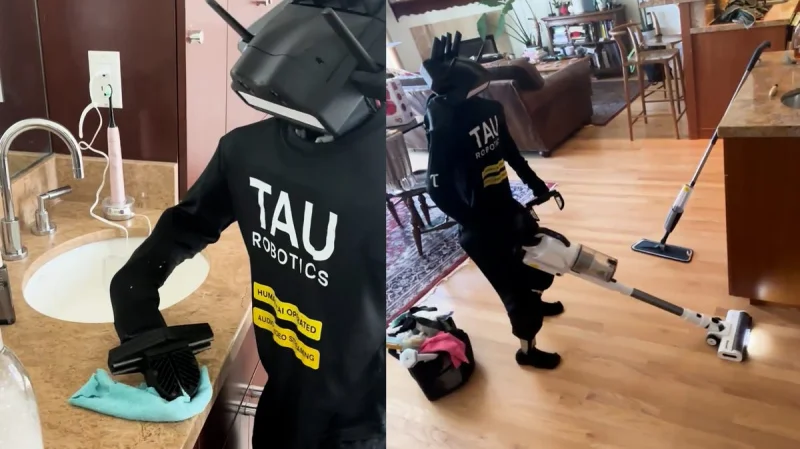
Gianna Capezio rented a humanoid robot to clean her San Francisco apartment for one hour on Friday, Aug. 21, and the video she posted soon after turned a routine chore into a viral argument. The robot made her bed, cleaned the bathroom and vacuumed, all for $30 an hour through Tau Robotics.
That is why people searched for the clip now: it did not just show a machine doing housework, it put a price on a humanoid robot apartment cleaning service and asked viewers to decide whether that was a novelty or a replacement. Capezio said the robot was not working on its own but had a teleoperator pulling its strings, which makes the scene look less like a fully automatic cleaner and more like remote labor in a metal shell.

Capezio told Storyful the robot moved slower than she expects a human cleaner might have, but she still said it did a solid job. She also said she did not redo any of the work afterward. That matters because the video’s main criticism was not only that the robot looked slow; viewers also questioned whether the cleaning was thorough enough to justify hiring a machine over a person. If the bed was made, the bathroom cleaned and the floor vacuumed, then the task list was limited to those chores and nothing more, which leaves little room for the kind of deep clean people may have assumed from the label.
Tau Robotics, which is based in San Francisco, offers house cleaning, deep cleaning and office cleaning services and says its robots can vacuum floors, take out the trash and clear clutter. The company says it uses three different robots depending on how much cleaning is required: Chelsea handles house chores, while Elon and Tony are assigned to recurring visits and deep cleans. It says the robots can be rented online for $30 an hour, with prospective clients able to book as early members or join a waitlist for future bookings.
The backlash around Capezio’s TikTok did not come from speed alone. It came from the broader question of what kind of work a humanoid robot should do, and who it should displace while doing it. That question is getting sharper as companies try to sell these machines as household help, not just lab demonstrations. In October 2025, 1X said its humanoid robot Neo went live for pre-orders at $20,000, with a $499-a-month subscription option, marketed as a house keeper and companion that combines AI and advanced hardware to help with daily chores. Capezio’s clip shows how quickly that idea can move from product pitch to public backlash. The next test is whether people will keep booking the service for the same price, or decide the social cost is higher than the chore itself.