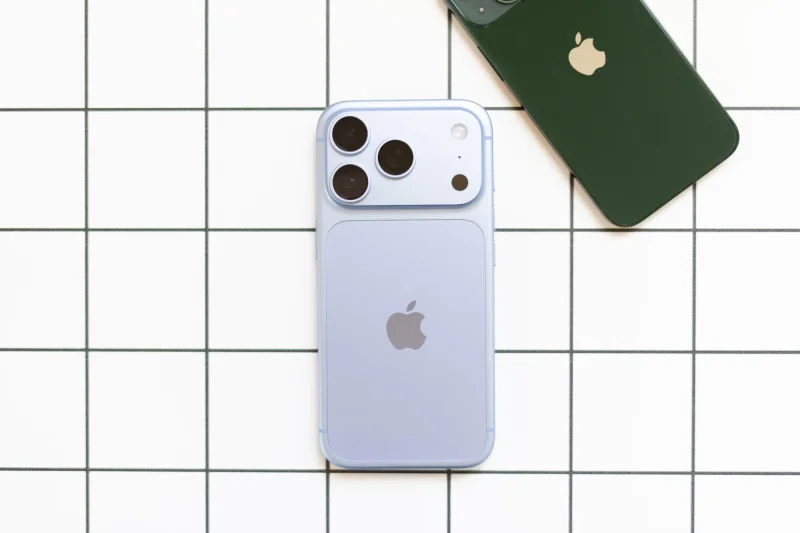
Apple’s iPhone Handoff was announced last month with the Duo, and the feature is now being pushed as a way to keep one phone number active on two iPhones at the same time. For people looking at the Iphone Duo Pre-order decision, that matters because the feature is not about buying a second line. It is about making one number follow you between two phones.
That is why the search traffic is building now. Apple’s setup lets you pick one iPhone as the main phone and another as the secondary phone, then the number becomes active on whichever one you unlock. The active phone is the one that takes calls and handles Find My, so the switch is not just cosmetic. It changes which device is carrying the number at that moment.
T-Mobile is the first US carrier to support the feature, and it charges an extra $5 a month. Verizon is planning to add support by the end of the year, while AT&T is not currently supported. That puts a clear boundary around launch-day use: the idea may be simple, but the rollout is still narrow.
There is also a catch in the way the feature is meant to work. T-Mobile says the secondary iPhone should not have any other service attached to it, and it cannot be used with a T-Mobile business account at launch. That is a sharp limit for something presented as seamless, especially for anyone hoping to move between phones without thinking about the plumbing underneath.
The feature exists because some buyers do not want one device to do everything all the time. Apple has framed the Duo as a phone that can shift shape, but it comes with downgraded camera hardware, and some people may still want to use a regular iPhone sometimes instead. The same logic applies to battery life concerns around the iPhone Air and iPhone Mini: a second phone can be useful if the first one is not always the right one for the day.
In practice, iPhone Handoff looks less like a replacement for swapping eSIMs than a controlled alternative to it. Instead of moving service from one phone to another, the number stays tied to both and wakes up on the one you unlock. That makes it easier to carry two iPhones for different moments, but it also means the value of the feature depends on whether the user fits the narrow launch rules.
For now, that leaves Apple’s newest pairing strategy in a very specific place: useful for some, unavailable for others, and still waiting on broader carrier support. The real test is not whether the Duo can move the market on day one, but whether enough people want a second iPhone badly enough to pay for a feature that only partly untethers them.