


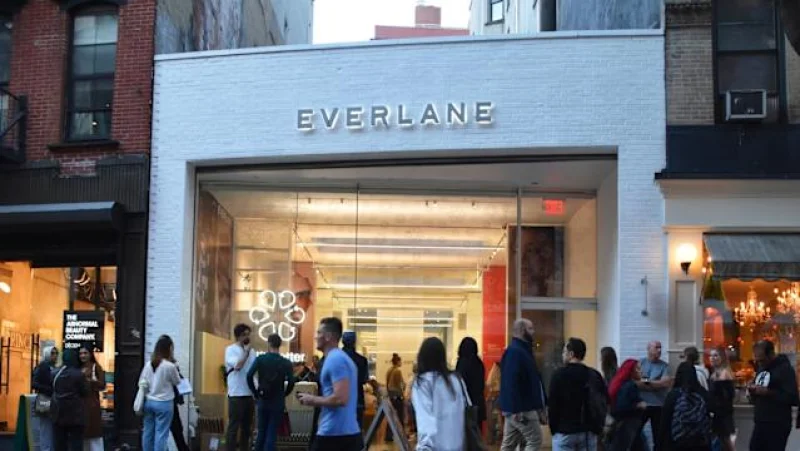
Everlane, the U.S. clothing brand built on “radical transparency” and ethical basics, is facing intense scrutiny after accounts of a planned sale to Shein valued at about $100 million. The deal has not been publicly confirmed by Everlane, Shein or majority owner L Catterton, but the prospect has already shaken shoppers who saw the brand as a symbol of sustainability-focused retail.
Everlane Deal Raises Questions About Brand Identity
The proposed transaction would mark a striking turn for Everlane, which rose in the 2010s by challenging traditional fashion markups and promising more openness about factories, materials and pricing. Its minimalist denim, T-shirts, sweaters and workwear became closely associated with a generation of consumers willing to pay more for cleaner supply chains and longer-lasting clothing.
Shein represents a very different model. The company became one of the world’s most powerful online fashion retailers by using rapid product cycles, low prices and aggressive digital marketing. Its scale has made it a dominant force in apparel, while also drawing sustained criticism over labor conditions, environmental impact and the pace at which ultra-cheap clothing moves from production to disposal.
That contrast explains the reaction. For many Everlane customers, a sale to Shein would not look like a routine retail acquisition. It would appear to put one of the best-known names in ethical fashion under the control of a company often used as shorthand for fast-fashion excess.
$100 Million Price Signals A Sharp Reset
The roughly $100 million valuation attached to the sale would represent a steep comedown from Everlane’s pandemic-era peak. The company was once valued at several times that level, helped by strong direct-to-consumer momentum, an influential brand story and investor confidence in digitally native retail.
That market has changed sharply. Many direct-to-consumer brands that once promised to bypass traditional retail have had to confront rising advertising costs, logistics expenses, store commitments and tougher competition from lower-priced rivals. Consumers have also become more selective as inflation squeezed household budgets.
Everlane’s debt load has become part of the story. The company had been seeking new investment or strategic options while carrying roughly $90 million in debt. That financial pressure helps explain why a sale could emerge even if the buyer creates reputational risk.
Shein Would Gain A More Premium U.S. Label
For Shein, Everlane could offer more than another apparel line. The brand brings a U.S. customer base, a cleaner design language and years of credibility among shoppers interested in quality, fit and sustainability claims.
That could help Shein broaden its image beyond ultra-low-cost trend fashion. The company has already been trying to answer criticism of its environmental and labor record, including commitments around emissions, renewable energy and supply-chain oversight. Owning a brand associated with ethical basics could support that repositioning, though critics are likely to view the move as image management unless operations change in measurable ways.

The unanswered question is whether Everlane would retain any meaningful independence. Its value rests heavily on trust. If customers believe standards have been diluted or the brand is being used to soften Shein’s reputation, the acquisition could damage the very asset Shein would be buying.
Sustainability Backlash Builds Online
The backlash has been swift because Everlane’s identity was unusually moralized for a fashion label. Shoppers were not just buying neutral shirts, jeans and coats; many were buying into the idea that apparel could be simpler, more durable and less opaque.
A Shein deal cuts directly against that story. Critics argue that a sustainability brand cannot credibly sit inside a fast-fashion giant without changing what the word sustainability means. Others see the development as a broader sign that ethical retail remains difficult to scale when consumers face cheaper alternatives at every turn.
The reaction also reflects disappointment with the larger direct-to-consumer era. Brands such as Everlane once promised to remake consumer goods around transparency, quality and values. A sale under financial pressure would suggest that mission-driven retail still has to survive the same forces that shape the rest of the industry: price, speed, margins and investor exits.
Everlane Had Been Reworking Its Message
Before the sale accounts emerged, Everlane had already been trying to refresh its positioning. Under CEO Alfred Chang, who joined in 2024, the company moved toward a “clean luxury” message focused on natural fibers, elevated basics and a more polished brand voice.
The shift included more visible marketing and celebrity-led campaigns, a notable change for a company that originally built its appeal by avoiding much of the fashion industry’s conventional glamour. Everlane also emphasized progress on preferred materials and reductions in virgin plastic use as part of its sustainability pitch.
Those efforts suggested a brand searching for renewed relevance after losing some of the cultural momentum it had in its early years. The sale conversation now raises whether that repositioning came too late to solve deeper financial problems.
What Comes Next For Shoppers And The Industry
The next step is confirmation of the transaction terms and what they mean for employees, shareholders, suppliers and customers. Key details remain unresolved, including whether preferred shareholders receive cash or equity and how Everlane would operate if the deal closes.
For shoppers, the practical questions will be more direct: whether product quality changes, whether factory disclosures remain, whether sustainability commitments survive and whether prices shift under new ownership.
The broader message is already clear. Everlane’s uncertain future has become a test of whether values-based fashion can compete in a market increasingly dominated by speed and price. If the sale goes through, the brand that once made transparency its signature will have to prove that its principles can survive inside one of the most controversial companies in global retail.
