


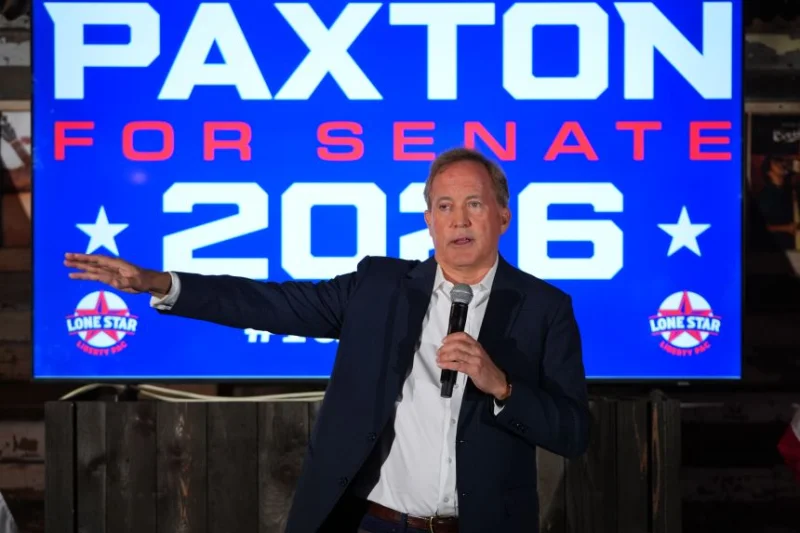
Donald Trump’s late endorsement of Ken Paxton in Texas landed as Kentucky voters were deciding whether to renominate Rep. Thomas Massie, tying two Republican contests into a broader test of Trump’s power over the GOP. In Kentucky’s 4th Congressional District, official election results had not yet shown a winner as of Tuesday morning ET, while recent Thomas Massie primary polls pointed to a close race against Trump-backed challenger Ed Gallrein.
Massie Election Results Remain Unclear In Kentucky
The immediate question for voters searching Thomas Massie election results is still unresolved: no winner had been confirmed in the Kentucky primary as early official returns had not yet reported meaningful vote totals.
Massie, a libertarian-leaning Republican first elected to Congress in 2012, is facing one of the toughest primary fights of his career. Gallrein, a former Navy SEAL and farmer, entered the race with Trump’s endorsement and a campaign built around loyalty to the president’s agenda.
Kentucky’s 4th District, which stretches across northern Kentucky and includes Cincinnati suburbs, is strongly Republican. That means the GOP primary is likely to decide the district’s next member of Congress barring a major political shift in November.
Thomas Massie Polls Showed A Volatile Race
The final public polling before the May 19 primary showed a contest that had tightened dramatically.
An April survey had Massie leading Gallrein, while a later May poll showed Gallrein ahead, 48.3% to 43.1%, with 7.6% undecided. Another final pre-primary snapshot suggested a near-even race, reinforcing the view that turnout would matter more than any single poll.
The movement in the polls reflected weeks of heavy advertising, national attention and Trump’s direct involvement. Massie began the campaign with deep name recognition and a long record of winning Republican primaries by large margins. Gallrein, by contrast, benefited from a late consolidation of anti-Massie energy and support from voters who saw Trump’s endorsement as decisive.
The polling also suggested a generational split. Younger conservative voters appeared more open to Massie’s anti-establishment style, while older Republicans showed stronger movement toward Gallrein.
Why Trump Targeted Thomas Massie
Trump’s effort to defeat Massie is rooted in years of friction between the president and one of the House GOP’s most independent members.
Massie has opposed major spending bills, criticized U.S. military action overseas and challenged Republican leaders on transparency issues, including the push to release Jeffrey Epstein-related files. He has also broken from much of his party on U.S. aid to Israel, drawing intense outside spending from pro-Israel groups.
Those positions helped Massie cultivate an image as a constitutional conservative willing to defy both parties. They also made him a prime target for Trump, who has increasingly treated dissent inside the Republican Party as a political offense.

Gallrein’s campaign has argued that Kentucky Republicans deserve a representative more aligned with Trump and the party’s national direction. Massie has countered that his independence is the point, telling voters that he supports conservative principles even when doing so irritates party leaders.
Trump Endorses Paxton Over Cornyn
The Kentucky primary unfolded the same day Trump endorsed Ken Paxton in the Texas Republican Senate runoff against Sen. John Cornyn.
That decision carries major national stakes. Cornyn is a longtime incumbent and former Senate GOP leader, while Paxton has positioned himself as the more combative pro-Trump conservative. The two advanced to a May 26 runoff after neither secured a majority in the March primary.
Trump praised Paxton as a loyal MAGA ally and criticized Cornyn as insufficiently supportive during difficult moments. Cornyn responded by emphasizing his conservative voting record and warning that Paxton could be a weaker general-election nominee.
The endorsement was a blow to Senate Republican leaders, many of whom preferred Cornyn because they see him as a safer candidate in November. Their concern is that Paxton’s legal and ethical controversies could make Texas more expensive and competitive than Republicans want in a midterm year.
James Talarico Adds Pressure To The Texas Race
James Talarico, the Democratic Senate nominee in Texas, is a key reason Republicans are watching the Paxton-Cornyn runoff closely.
Talarico, a state legislator from Austin, has drawn national attention for his fundraising, communications style and ability to appeal beyond the Democratic base. Texas remains a Republican-leaning state, but Democrats see a more realistic opening if the GOP emerges from the runoff divided or nominates a candidate with significant vulnerabilities.
A Paxton win would energize Trump-aligned conservatives but could give Democrats a sharper argument about corruption and extremism. A Cornyn win would preserve Republican establishment strength but could leave some pro-Trump voters less enthusiastic after a bitter runoff.
The outcome will affect where national parties spend money, how Senate control is framed and whether Texas remains safely in the Republican column or becomes a major battleground.
Two Races, One Republican Fight
The Massie primary and the Paxton endorsement are different contests, but they point to the same central question: how much room remains in the Republican Party for candidates who are conservative but not fully aligned with Trump.
If Massie survives in Kentucky, it would show that an incumbent with a clear ideological brand can withstand Trump’s opposition, even under massive spending pressure. If Gallrein wins, it would reinforce Trump’s power to remove Republicans who cross him.
In Texas, Paxton’s late boost tests whether Trump can overrule Senate GOP leaders in a high-stakes runoff. Together, the races offer an early signal about the 2026 midterm environment: Republican voters are not just choosing nominees, but deciding what kind of loyalty the party now demands.
