Iranian state-linked media are floating a fresh way to turn the Strait of Hormuz into a revenue stream: charging foreign tech companies for internet cables that run beneath the waterway, and settling insurance for ships in bitcoin. Tasnim and Fars suggested last week that Iran could use its leverage over the chokepoint to make companies such as Meta, Google, Amazon and Microsoft pay to operate under Iranian law.
Tasnim said the plan could bring in hundreds of millions of dollars a year. The outlet also argued that Iran should monopolize repair and maintenance of the subsea cables and charge licence fees to use them, saying the move would “transform the strait of Hormuz into a strategic hub for the generation of legitimate wealth.”
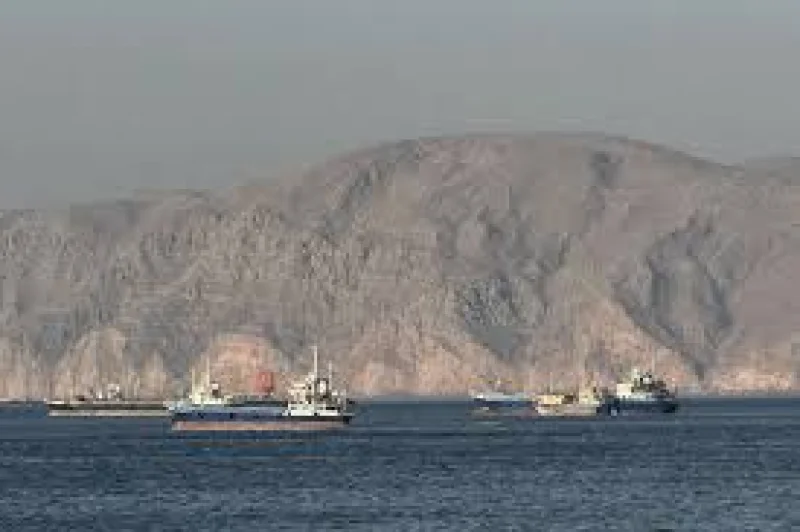
The proposal landed in a place where the infrastructure already matters. At least seven cables lie beneath the waters of the Strait of Hormuz, a 25-mile (40km) stretch between Iran and Oman that sits at the center of global shipping and data traffic. The undersea lines are described as vital to the massive AI buildout under way in Gulf countries, which makes any suggestion of new access fees or disruption particularly sensitive.
Tasnim tried to root the idea in law, citing article 34 of the 1982 UN convention on the law of the sea. Its argument was that the article allows Iran to claim part of the seabed of the Strait of Hormuz as its territory even while the surface waters remain open to international navigation. The outlet pointed to Egypt as a country that already charges fees on cables crossing its territory.
But the comparison only goes so far. Doug Madory said Egypt’s cables actually pass through Egyptian territory in a way that is very different from the Hormuz route, noting that many of Egypt’s lines run overland beside highways and oil pipelines. He also said most of the cables in question do not terminate in Iran and pass under the sea miles offshore, making the notion of direct tolls far more complicated.
A former US State Department official who specializes in the global internet said sanctions would also matter. The official said it would be impossible to charge specific companies because there is no way to separate out their internet traffic. That leaves Iran with a headline-grabbing proposal and a hard practical limit: even if it wanted to target a handful of American technology firms, the cables carry data that is not neatly sorted by company.
Madory was blunter. “The only way they could extract tolls for ships or submarine cables is through threats,” he said, adding that cutting the cables under the Strait of Hormuz would be a “suicide mission.” He said it was very unlikely Iran could cut the lines unnoticed and that it does not have the technology to do so quietly, meaning any attempt would have to be overt.
That is the tension running through the proposal. Iranian media are presenting a legal and commercial vision for a vital waterway, but the mechanics of enforcing it would likely depend less on law than on coercion. Madory called the idea “hyperbolic,” and said most cable breaks are far more likely to be accidents, such as dragging anchors, than intentional sabotage. For now, the Strait of Hormuz remains what it already is: a narrow corridor where shipping, internet infrastructure and geopolitical pressure all run through the same 25 miles.