



Iran is moving toward tighter control over the Strait of Hormuz internet cables, a development that could put one of the world’s most important digital corridors under the same kind of pressure long associated with the waterway’s oil traffic. Business Today reports that Tehran plans to require foreign operators to obtain permits and pay fees for seabed infrastructure, while giving the government exclusive control over maintenance and repair operations.
The stakes are hard to overstate. Major submarine cables carrying 97% of international internet speed pass through the 21-mile-wide strait, including the Asia-Africa-Europe 1 system and the FALCON network. Together, the lines through the chokepoint are estimated to carry about $10 trillion in daily financial transactions, a figure that explains why the region’s digital routes are attracting as much political attention as its tanker lanes.
That attention is not coming out of nowhere. The Strait of Hormuz has long been a critical oil chokepoint, and the same geography that concentrates shipping also clusters the cables linking Europe, Asia and the Gulf states. The global internet has redundancy, but chokepoints can still create prolonged digital blackouts when repairs are delayed, especially if a damaged line sits idle while authorities decide who gets access to the seabed.
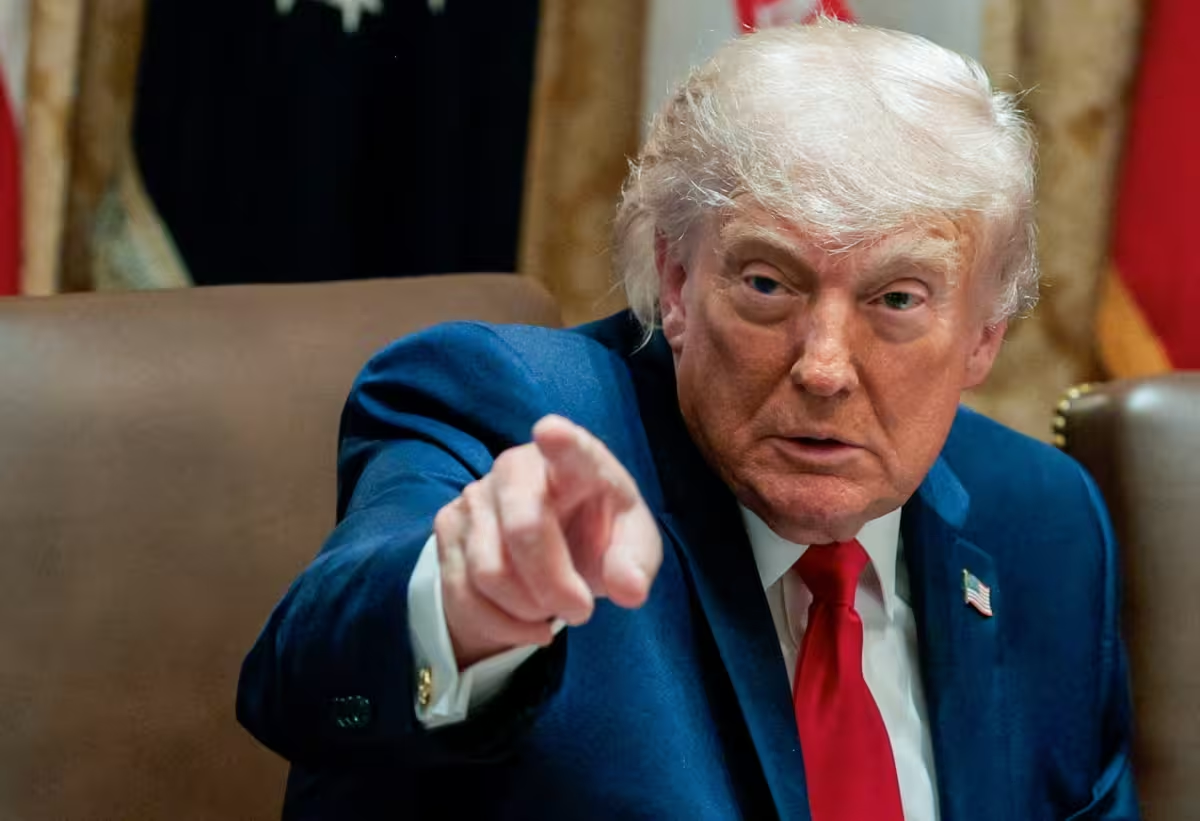
IRGC-linked media outlets have begun to frame submarine cables as leverage, arguing that Iran should seek protection fees on infrastructure they say carries 20% of global data flows. Tasnim News Agency has published pieces saying Iran has been deprived of economic benefits from cables carrying over $10 trillion in transactions daily, an argument that turns the undersea network from an engineering issue into a revenue question.
The tension is practical as much as political. Submarine cables break regularly because of ship anchors, fishing nets and earthquakes, and when they do, the clock matters. In 2024, multiple cable faults in the Red Sea took roughly six months to fix instead of the usual weeks after specialized repair ships could not get permits to work on the damage. A similar delay in the Strait of Hormuz would hit Gulf states that are building digital economies around AI and cloud services hardest, because those systems depend on steady cross-border data flows even when the internet itself is designed to reroute around trouble.
That is what makes Iran’s move more than a bureaucratic change. It signals that the narrow waterway that has long shaped the oil market may also become a point where control over information, finance and infrastructure collides in real time.
