


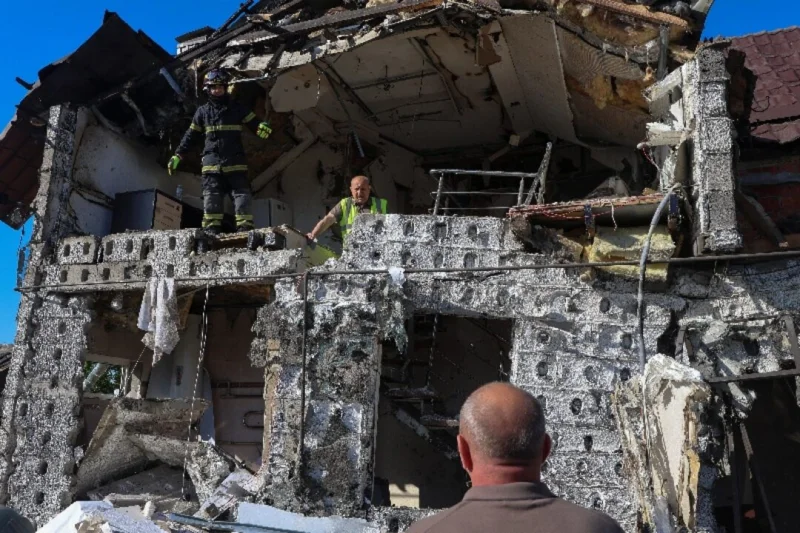
Ukraine launched drones toward Moscow and several Russian regions in the latest round of long-range attacks, prompting air-defense alerts near the capital and underscoring how the war’s drone campaign is reaching deeper into Russian territory while Russia continues heavy strikes across Ukraine.
Russian officials said four drones aimed at Moscow were intercepted on Tuesday, May 19, while additional Ukrainian drones were reported over regions including Kursk, Rostov and Yaroslavl. The latest wave followed a larger weekend assault in which Russian authorities said hundreds of drones were shot down across multiple regions, with casualties reported outside the capital. Ukraine has not publicly detailed every target, but Kyiv has increasingly used long-range drones to pressure Russian military, energy and logistics infrastructure far from the front line.
Moscow Faces Renewed Drone Pressure
Moscow has become a recurring target in Ukraine’s long-range drone campaign, though successful strikes in the heavily defended capital region remain comparatively rare. Tuesday’s reported interceptions suggest Russia’s air-defense network around the capital remains on heightened alert after a weekend of more intense attacks.
Moscow Mayor Sergey Sobyanin said air defenses had destroyed drones approaching the city, with emergency crews sent to debris sites. Russian aviation authorities have frequently imposed temporary restrictions at airports around Moscow during drone alerts, a sign of how even intercepted attacks can disrupt civilian travel and security operations.
The capital’s symbolic value is central to the campaign. Drone attacks near Moscow do not need to cause large-scale physical damage to carry political weight. They challenge the Kremlin’s effort to keep the war distant from ordinary life in Russia’s most important city and force air defenses to protect high-profile areas far from Ukraine.
Regions Beyond The Capital Also Targeted
The latest attacks were not limited to Moscow. Russian officials also reported drones in Kursk, Rostov and Yaroslavl regions, reflecting a broader Ukrainian pattern of striking transportation nodes, energy facilities, industrial sites and military-linked infrastructure.
Kursk has repeatedly come under attack because of its proximity to Ukraine and its role in Russia’s border defenses. Rostov is strategically important because it serves as a major military and logistics hub for operations linked to southern Ukraine. Yaroslavl, farther north, has drawn attention because attacks there suggest Ukrainian drones can reach industrial targets deep inside Russia.
Russian authorities said the weekend wave killed four people and injured more than 20 across targeted areas. Those claims have not been independently verified in full, but they show how Moscow is presenting the attacks domestically: as evidence of Ukraine widening the war inside Russia.
Russia Strikes Ukraine’s Ports And Cities
The drone activity over Russia came as Moscow continued its own aerial campaign against Ukraine. Russian strikes hit the Danube port city of Izmail in Odesa region, damaging port infrastructure but causing no reported casualties. Izmail is a crucial logistics hub for Ukrainian grain and cargo exports, particularly since Russia’s full-scale invasion reshaped shipping routes through the Black Sea and Danube corridor.
Russian attacks also struck Kharkiv, Dnipropetrovsk, Mykolaiv and Zaporizhzhia regions. In Kharkiv, emergency crews worked at sites where people were reported trapped under rubble. Ukrainian officials said Russia’s overnight attacks included large numbers of drones and missiles aimed at civilian and infrastructure targets.

The back-and-forth has reinforced a familiar wartime pattern: Russia attacks Ukrainian cities and logistics networks, while Ukraine uses drones to hit Russian territory, especially energy and military-support facilities. Each side denies deliberately targeting civilians, but civilians on both sides of the border have increasingly been exposed to the effects of long-range strikes.
Why Ukraine Is Expanding Long-Range Drone Attacks
Ukraine’s long-range drone strategy is aimed at stretching Russia’s defenses and weakening the systems that support Moscow’s war effort. Kyiv has repeatedly targeted refineries, fuel depots, oil export infrastructure and military production facilities, arguing that these sites help finance or sustain Russia’s invasion.
Ukrainian officials have said previous strikes reduced Russian oil refining capacity and disrupted operations at some energy facilities. The economic impact is difficult to measure in real time, but the strategic logic is clear: drones give Ukraine a relatively low-cost way to impose costs across Russia’s vast territory.
The campaign also carries psychological and political significance. Bringing the war closer to Moscow and other Russian regions undermines the sense of insulation that many Russians had during the early phase of the invasion. It also forces the Kremlin to devote more air-defense assets to domestic protection rather than the front line or occupied territories.
Drone War Raises Risks Beyond Russia And Ukraine
The intensifying drone war is creating risks for neighboring countries. NATO members in the Baltic region have faced growing concerns over stray or suspected Ukrainian drones entering their airspace after long-range missions over Russia. Estonia said a NATO jet shot down a suspected Ukrainian drone on Tuesday, while Latvia also issued alerts near its Russian border.
Those incidents show how long-distance drone operations can create unintended escalation dangers even when the intended targets are inside Russia. A drone that loses navigation, is jammed, or crosses into another country can trigger air-defense responses and diplomatic strain.
The risk is especially sensitive because NATO countries are not combatants in the war, even though they support Ukraine militarily and politically. Any repeated airspace violations will increase pressure on governments to strengthen monitoring, interception and coordination with Kyiv.
What Comes Next In The Ukraine News Cycle
The immediate question is whether the latest Moscow-bound drones were part of a short burst of attacks or the beginning of another sustained Ukrainian campaign against Russian infrastructure. The answer will become clearer if strikes continue across multiple Russian regions in the coming days.
For Moscow, the challenge is defending both the front line and a growing list of domestic targets. For Kyiv, the challenge is balancing military pressure on Russia with the risks of civilian casualties, diplomatic complications and possible retaliation.
The latest Ukraine drone strikes near Moscow show that the air war is no longer confined to the skies above Ukrainian cities. It is now a widening contest of range, production capacity, air defenses and political endurance, with Russian regions far from the battlefield increasingly pulled into the conflict’s daily rhythm.
