


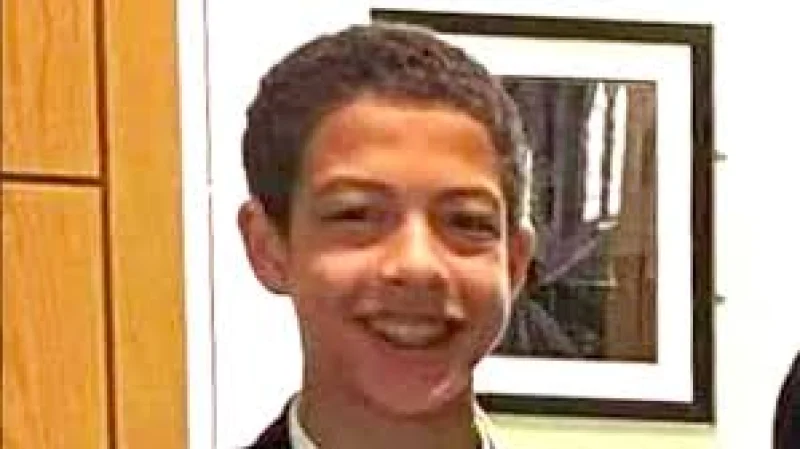
The inquest into Noah Donohoe’s death has entered another critical phase in Belfast, with recent evidence focusing on the storm-drain tunnel where the 14-year-old was found, the condition of the culvert entrance, and whether public safety risks were properly assessed before the tragedy.
Noah disappeared on June 21, 2020, after leaving home on his bicycle to meet friends in the Cavehill area. His body was recovered six days later from an underground water tunnel in north Belfast. A post-mortem examination found drowning to be the cause of death, but the circumstances of his final movements, the police search and the infrastructure around the culvert have continued to drive public concern.
Inquest Focus Turns To Culvert Safety
Recent evidence has examined whether the culvert entrance near Northwood Road presented hidden dangers and whether earlier refurbishment work adequately considered the risk of public access. The inquest heard that a new debris screen was installed in 2017, along with other work at the site, three years before Noah’s death.
Experts were asked whether the replacement screen should be considered a like-for-like change from an earlier grille. They rejected that description, with one expert indicating that the 2017 arrangement was primarily designed around workers rather than members of the public.
That distinction matters because the central safety question is not simply whether the culvert served its drainage purpose, but whether it was reasonably foreseeable that someone could enter it and come to harm. Evidence has also explored the balance officials faced between flood risk, debris management and preventing access to a confined, dark tunnel.
Department Evidence Comes Under Pressure
The Department for Infrastructure has faced detailed questioning over what it knew about the site, how risk was assessed, and whether gaps in documentation affected the investigation. A senior official told the inquest that Noah’s death came as a shock and said he had not encountered another death in similar circumstances.
The same official rejected suggestions that the department had failed to understand whether parts of the culvert were locked or accessible. But questioning for Noah’s mother, Fiona Donohoe, has highlighted concerns over whether the department fully appreciated the danger of the tunnel entrance and whether a more restrictive screen could have reduced the risk.
The inquest has also heard that one department official later entered the tunnel to understand its structure and assess whether it was possible to get out once inside. That evidence drew scrutiny because Noah was found more than 600 metres downstream from where he was last seen close to the culvert inlet.
Search And Recovery Evidence Remains Central
Police evidence has continued to examine the early search response, CCTV review and the timeline of Noah’s last confirmed movements. The inquest previously heard that officers missed footage of Noah on some cameras during the first stages of the investigation, while other evidence showed him cycling through north Belfast without appearing to interact with anyone on the route captured by CCTV.
One officer involved in the recovery described marks believed to have been made by Noah’s fingers on the tunnel wall near where his body was found. The marks were described as indents in sludge, stopping short of his body. That evidence added a stark detail to the inquest’s examination of what may have happened inside the tunnel.

The court has also heard about the darkness and confined nature of the drainage system. Witnesses have described conditions inside the tunnel as extremely difficult, with poor visibility and potential for disorientation. Those details are important because they bear directly on how Noah could have become trapped or unable to find his way out.
Digital Evidence And The Missed Message
Another strand of the inquest has involved Noah’s phone and online activity. Evidence indicated that he likely did not see a message cancelling a planned meet-up with friends because he had already left home and no longer had Wi-Fi access. His last recorded online activity included a search connected to Cavehill.
The missed message helps explain why Noah may still have been travelling when the planned meeting was no longer going ahead. But it does not answer why his route changed or why his behavior became so unusual before he entered the area where he was last seen.
Phone evidence has also included questions around call activity and images recovered from the device. These details are being examined carefully because the inquest is trying to reconstruct not only where Noah went, but what information he may have had in the final hours of his life.
Medical And Forensic Evidence Has Set Boundaries
Forensic evidence has not established third-party involvement in Noah’s death. Pathology evidence has been consistent with drowning, and toxicology testing found no evidence that he was under the influence of drugs or alcohol within the range of screening performed.
Experts have also cautioned that no testing can exclude every possible substance with absolute certainty, particularly unstable or designer drugs that may break down quickly or fall outside standard screening. That caveat has been presented as a scientific limitation, not proof that drugs were present.
The distinction is important in a case surrounded by years of speculation. The inquest is dealing with evidence, not online theories. Its task is to determine the circumstances in which Noah died and whether actions by public bodies contributed to the outcome.
What Happens Next In The Noah Donohoe Inquest
The inquest, which began in January 2026 and has continued far longer than initially expected, remains focused on building a full public record. The jury has heard evidence from police, forensic specialists, infrastructure officials, search personnel and witnesses connected to Noah’s final journey.
For Fiona Donohoe, the proceedings are about more than confirming a medical cause of death. They are about accountability, transparency and understanding how a child who left home to meet friends ended up dead in a storm drain.
The next phase is expected to continue testing the decisions made before and after Noah disappeared: how the culvert was secured, how the search was handled, how evidence was gathered and what lessons should be drawn. Until those questions are fully addressed, the inquest remains one of Northern Ireland’s most closely watched legal proceedings.
