


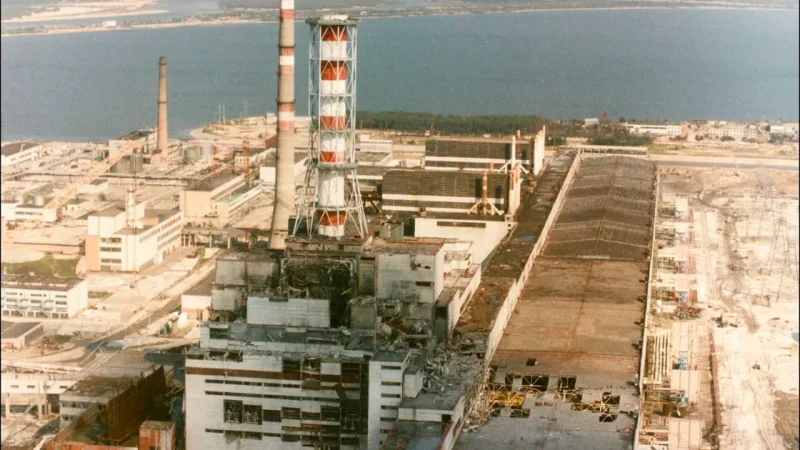
On April 26, the 40th anniversary of the Chornobyl disaster was marked with a grim reminder that the worst nuclear accident in history was also a disaster of silence. Safety measures were ignored, reports were delayed for days, and Soviet authorities kept the scale of the explosion hidden until Sweden forced the truth into the open.
The International Atomic Energy Agency says the warning signs were missed. The United Nations says no reports were released until the third day after the Chornobyl explosion, and only then did Swedish authorities announce that a nuclear accident had occurred somewhere in the Soviet Union. Before that, the Soviet authorities had chosen not to report the accident or its scale in full. The cost of that concealment was measured not just in secrecy, but in exposure.
Five days after the nuclear explosion, Soviet authorities went ahead with the May 1 parade in Kyiv, about 90 kilometers, or 56 miles, from Chornobyl. More than 120,000 people were endangered by the event, and school children were required to take part. By then, many families still did not know what they had been exposed to, or what they should have done instead.
That failure to warn mattered because radiation did not disappear when the state chose silence. The United Nations said more than 6,000 cases of thyroid cancer had been reported in children and adolescents exposed at the time of the accident by the year 2005, and that many of those cancers were most likely caused by radiation exposures shortly after the blast. The UN also said early communication of protective measures would most likely have helped people avoid radionuclides such as iodine 131, which is known to cause thyroid cancer, and that early evacuation would have helped people avoid the area during the period when iodine 131 is most dangerous, 8-16 days after release.
The human cost was not only physical. The UN’s language from the time still carries the panic that Soviet officials never answered: “Is it safe to leave the house? Is it safe to drink water? Is it safe to eat local produce?” Those were the questions people should have been able to ask and answer before a parade, before rumors, before radiation had time to settle into fields, homes and bodies. Instead, the disaster became a state secret first and a public health emergency later.
The anniversary lands in a new and unsettling context. A month before the Chornobyl explosion, Mikhail Gorbachev addressed the 27th Congress of the Communist Party and announced glasnost and perestroika, reforms that were meant to open Soviet life. Chornobyl showed how far the system still was from transparency. That same pattern of disregard for human life now shadows Russia’s attack on Europe’s largest nuclear plant at Zaporizhzhia, which it continues to occupy. In February 2025, Russia was still fighting its all-out war against Ukraine 39 years after the Chornobyl disaster.
The message from both disasters is hard to miss. When leaders hide danger, delay evacuation and treat nuclear risk as a political problem instead of a public one, the damage lasts far beyond the blast itself. Chornobyl was not only a failure of technology. It was a failure of authority, and the aftershocks are still being felt in Ukraine today.
