


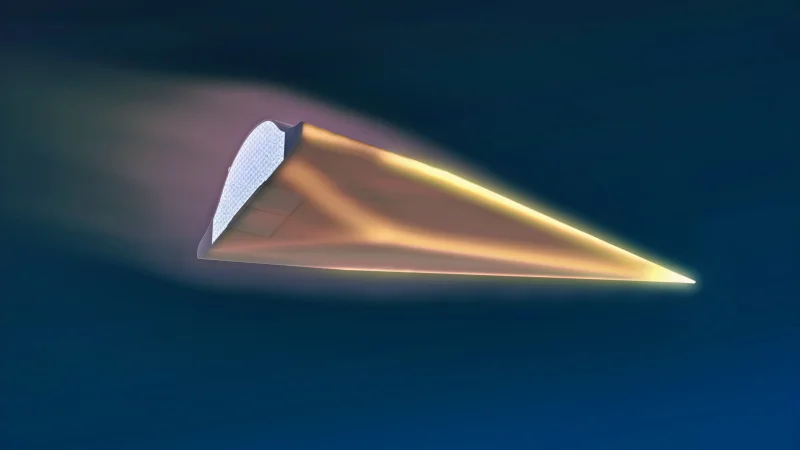
Darpa’s Falcon Hypersonic Technology Vehicle 2 reached about Mach 20, a blistering speed of roughly 13,000 miles per hour or 3.6 miles per second, in a program built to push the limits of hypersonic flight. The unmanned craft was designed to show it could move from New York City to Los Angeles in under 12 minutes and, in Darpa’s telling, travel anywhere around the globe in under an hour.
The flight tests were brief, but the data were not. Falcon first flew in 2010 and stayed aloft for nine minutes, hitting over Mach 17 for 139 seconds. Darpa said the program “deployed the largest number of sea, land, air, and space data collection assets in support of hypersonic flight test,” and also said it “maintained Global Positioning System signals while traveling 3.6 miles per second,” “validated two-way communication with the vehicle” and “verified effective use of the Reaction Control System.” A second flight followed in 2011 and lasted about nine minutes.
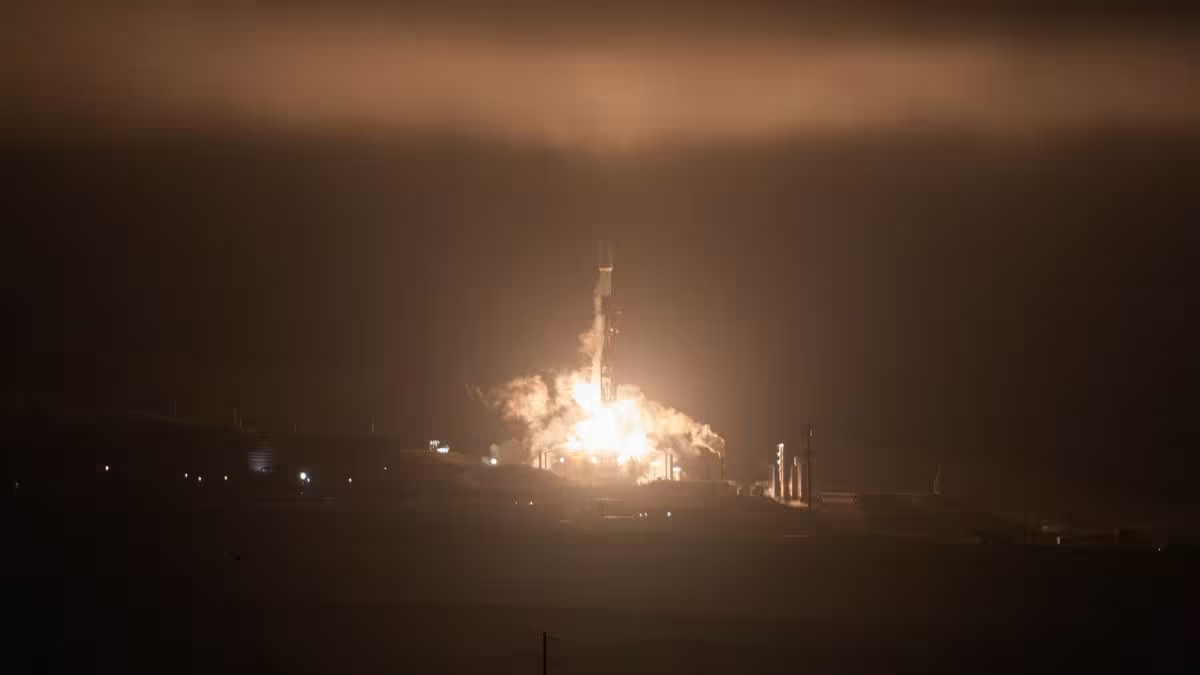
Years before that first launch, Darpa had modeled and simulated Falcon and carried out extensive wind-tunnel testing. The goal was to study shock waves, boundary layer transition, mechanical stresses and navigation at Mach 20 speeds, not to field a working missile. Falcon, short for Force Application and Launch from Continental United States, became a major reference point for the Pentagon’s Conventional Prompt Global Strike work and for the broader hypersonic push that followed.
That is where Falcon’s real significance sits. The vehicle was never intended to be a functioning missile, but the program helped shape the next generation of fast-strike research and showed how much could be learned from a craft that lasted minutes in the sky and returned with reams of data. In that sense, Falcon did exactly what Darpa wanted: it became a data truck for a future the U.S. military was still trying to understand.
