


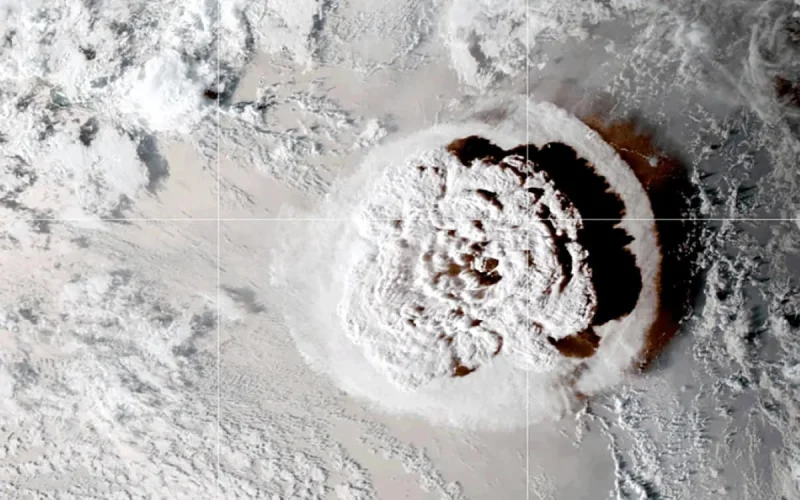
Satellites spotted something unexpected after the 2022 Hunga Tonga-Hunga Ha'apai eruption: a formaldehyde-rich plume drifting across the stratosphere that appeared to be eating methane as it moved. Researchers said the cloud, tracked for 10 days from the Pacific to South America, turned into a high-altitude chemical reactor that kept breaking down methane for more than a week.
The plume was rich in formaldehyde, a compound that forms when methane breaks apart, and satellite data showed levels as high as 12 parts per billion at about 30 kilometers altitude. Maarten van Herpen, one of the researchers, said the team was surprised by the record-high formaldehyde reading and that the cloud’s chemistry made it clear methane was being destroyed continuously as it traveled.
The team used TROPOMI aboard the European Space Agency's Sentinel-5P satellite to follow the plume as it lingered for days over the Pacific. It came from Hunga Tonga-Hunga Ha'apai, a submarine volcano sitting roughly 150 meters below the ocean surface, whose eruption hurled salty seawater upward with ash and volcanic gases and sent some of the plume more than 30 kilometers above Earth's surface.
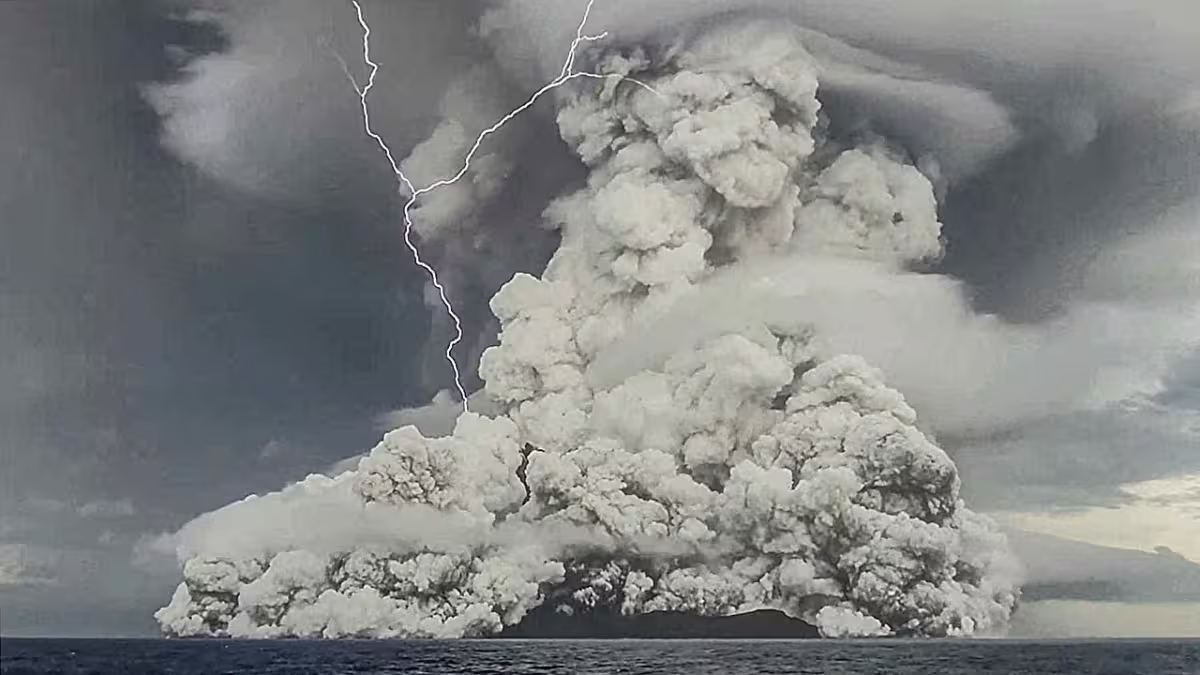
That mattered because the eruption did more than loft debris into the sky. Researchers said it injected a massive amount of water vapor into the stratosphere, raising the stratospheric water burden by about 10%, and the chemistry inside the plume may have produced chlorine atoms that attacked methane. Sunlight appears to have struck ash particles coated with sulfate, iron and salt, setting off reactions that sped the gas’s breakdown.
Van Herpen said the satellite record showed the cloud had to be destroying methane for more than a week because formaldehyde lasts only a few hours in sunlit air. The researchers estimated the eruption destroyed around 900 metric tons of methane per day, roughly the amount two million cows would produce in a year.
Methane is a potent greenhouse gas, and formaldehyde’s short life in the atmosphere makes the signal especially striking. Professor Matthew Johnson of the University of Copenhagen said the same mechanism appears to occur in a volcanic plume high up in the stratosphere, even though the physical conditions there are entirely different from the settings where similar reactions are usually seen. That is what makes this eruption stand out: it did not just change the sky above the Pacific, it showed that Earth's Atmosphere can host a fast-moving chemical process strong enough to erase methane on the way to South America.
