


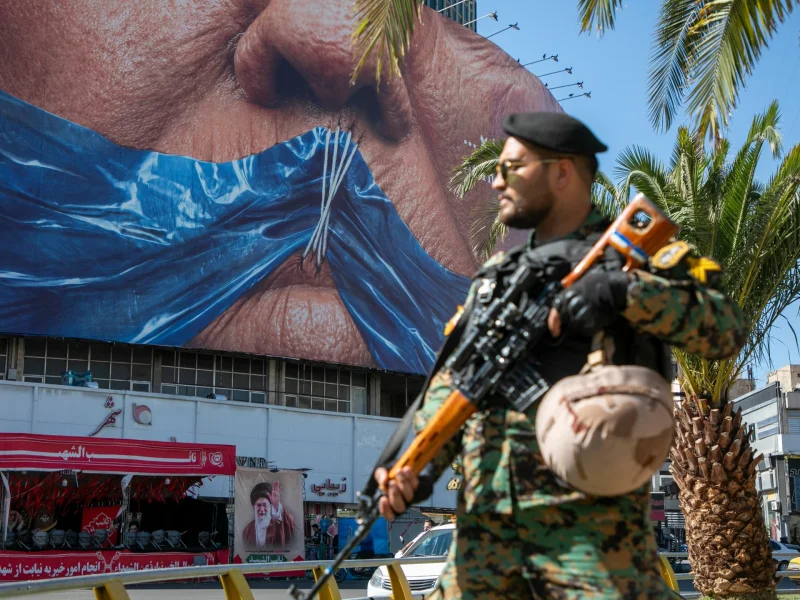
A Bahrain-led draft United Nations Security Council resolution on freedom of navigation through the Strait of Hormuz drew 112 co-sponsors on Tuesday, giving the push for protection of one of the world’s most critical shipping lanes a broad show of support at the UN. The measure was tabled by Bahrain and the United States and seeks to protect international waterways, commercial shipping and energy supplies while calling for the safety of seafarers to be ensured.
Qatar, Saudi Arabia and Kuwait joined Bahrain and the United States as principal sponsors, while India, Japan, South Korea, Kenya, Argentina and most member states of the European Union signed on as co-sponsors. Al Jazeera’s correspondent in New York said the list takes up three full pages, and Gabriel Elizondo said, “It’s essentially being co-sponsored by two-thirds of all 193 UN member states.”
The scale of the backing gives the draft more political weight than Bahrain’s first attempt, tabled last month and vetoed by China and Russia. This is the second such resolution Bahrain has put before the Security Council. China and Russia have already voiced reservations about the new draft, which also urges an immediate halt to Iranian attacks on Gulf neighbours.
The vote drive is unfolding while peace negotiations between Iran and the United States remain deadlocked. Washington is demanding that Iran dismantle its nuclear programme and lift its restrictions on the strait, while Iran is calling for war reparations, an end to the US naval blockade of its ports and a ceasefire on all fronts, including in Lebanon. Tehran also insists that any settlement recognise its sovereignty over the Strait of Hormuz, a demand Washington has called unacceptable.
Iran’s Deputy Foreign Minister Kazem Gharibabadi accused the United States on Tuesday of seeking capitulation rather than peace. He wrote that “True peace cannot be built with the language of humiliation, threat, and forced concession-taking,” adding that what was needed was “not maximum demands” but “the minimum requirements for any serious, sustainable arrangement.”
The regional mood was similarly guarded in Doha, where Turkey’s Foreign Minister Hakan Fidan travelled on Tuesday for talks with Qatari leaders. Fidan said the strait must not be used as a weapon and warned that “All the world’s states are now feeling the brunt of the closure of the Strait of Hormuz.” He said, “we do not support the resumption of war.”
Qatar’s Prime Minister Sheikh Mohammed bin Abdulrahman bin Jassim Al Thani also warned against a return to fighting and urged support for Pakistan’s mediation efforts. “The role Pakistan is playing is very important and critical for the entire region and for the world,” he said. The diplomatic activity comes as Trump’s state visit to Beijing overlaps with the crisis, and the war with Iran is expected to feature in his discussions with President Xi Jinping. China is Iran’s close ally and by far its largest oil customer, which helps explain why the Security Council fight over the Strait of Hormuz carries far beyond the Gulf.
For now, the draft has numbers on its side, but not a guarantee of passage. The opposition that killed Bahrain’s last attempt is still there, and the same council that would be asked to defend shipping lanes is divided over how much pressure to put on Tehran.
