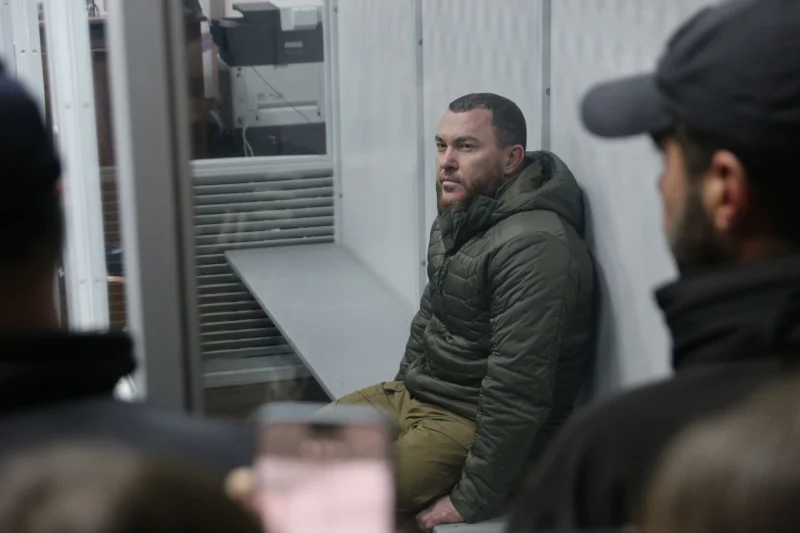
Ukraine's anti-corruption agencies have exposed an alleged alliance between organized crime figures and the law enforcement officials meant to stop them. Five people have been charged, four are already in pre-trial detention and one has been released on bail as investigators say the network bought protection for illicit businesses inside the state itself.
The case comes out of Operation Carthage, a NABU and SAPO investigation into fraudulent call centers, but the allegations now run much wider. Investigators say the network also trafficked drugs, produced counterfeit currency and used violence to intimidate critics and opponents, while senior officials in Ruslan Kravchenko's office were implicated and the probe helped force his ouster in September.
At the center of the case, investigators have named Andrii Osipov and Yehor Burkin. NABU recordings referred to Osipov as Criminal and Burkin as Mexican, and investigators say Burkin was the founder of the transnational drug ring Khimprom, which he allegedly headed from 2022 to 2026. Osipov is described as the intermediary who used his links inside Ukraine's law enforcement to shield the group.
That is what gives the scandal its force. The charged people include senior National Police officers and Security Service officials, and the arrangement allegedly ran through institutions that were supposed to fight organized crime. A former Security Service official described the scheme as looking like Russia, where criminal groups and law enforcement agencies are completely intertwined, calling it a Russian-style system that was brought into Ukraine and had to be cut out.
The case has also revived scrutiny of the Security Service, which remains one of Ukraine's least-reformed law enforcement institutions. The latest allegations have raised fresh questions about its broad powers and the lack of effective oversight, especially because the network under investigation was not limited to call-center fraud but stretched into drugs, counterfeit currency and intimidation.
Burkin's path helps explain why the file has become so sensitive. He moved from Russia to Ukraine in 2016, later fled to Latin America and is now of unknown whereabouts. Volodymyr Zelensky imposed sanctions on him in 2023, and NABU recordings suggest he maintained contact with the FSB during Russia's all-out war. For now, the open question is not whether the case is moving forward — it is. The question is which of the five charged people received bail, and how far investigators will push the chain of protection that was allegedly built around the network.