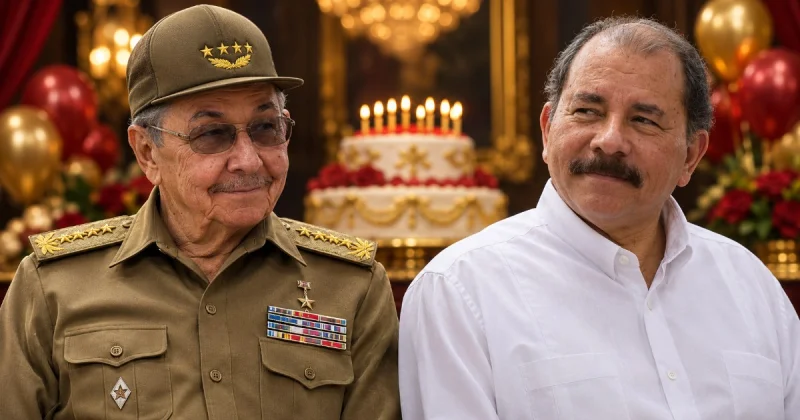
Raúl Castro marked Daniel Ortega’s 81st birthday on Wednesday with a letter dated November 11, 2026, from La Habana, praising the Nicaraguan leader as a “continuador de las luchas de Sandino y Carlos Fonseca Amador” and denouncing what he called an imperial offensive against sovereign peoples in Nuestra América. The message, circulated by Canal 2, closed with the slogan “Patria Libre o Morir” and included a personal greeting for Rosario Murillo.
The letter landed at a moment when Ortega’s public life is under sharper scrutiny than his birthday tributes. He reappeared on November 9 after 68 days away, but the Nicaraguan government has still issued no official medical diagnosis about his condition, and the greeting from Raúl Castro became a public show of backing for a man who has ruled since 2007 without free electoral competition.
For Miguel Díaz-Canel, the language of solidarity was just as pointed. He praised the “hermandad” between Cuba and Nicaragua, joining the chorus of congratulations that also included greetings from Vladimir Putin and Xi Jinping, as reported by Murillo on Monday. The timing matters because it came after the United States reminded Nicaragua on Tuesday that it should have held presidential elections that day, sharpening the political backdrop around Ortega’s birthday.
Castro’s message was also notable for how much it said without naming the pressure directly. At 95, he has made only rare public appearances and did not attend the IX Congreso del Partido Comunista de Cuba or the central act of July 26, yet this was his second letter in less than a week after he also wrote to congratulate the Contrainteligencia Militar cubana on its 64th anniversary. That sequence makes the birthday note look less like a private courtesy and more like a deliberate political signal.
The signal is easy to read in Havana and Managua alike. In May 2026, the Ortega and Murillo government had already backed Raúl Castro after he was formally charged in the United States over the 1996 downing of Hermanos al Rescate aircraft, and Washington has since widened sanctions pressure on Nicaragua, including the designation of two children of Ortega and Murillo and seven companies in the gold sector. The birthday letter does not answer what is behind Ortega’s 68-day absence, but it shows that both governments are still choosing public defiance over explanation.