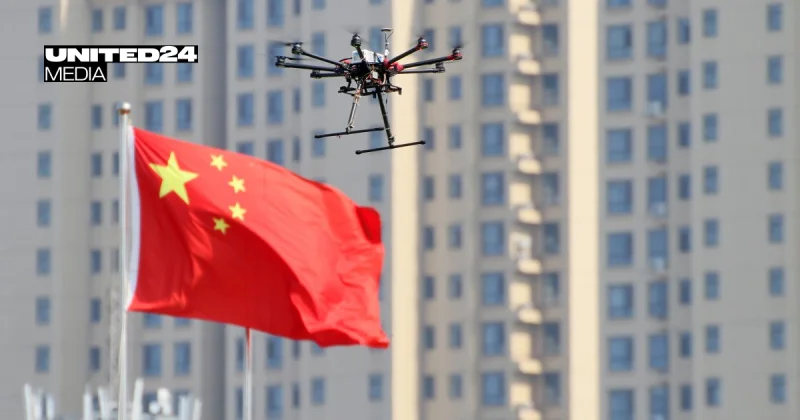
Germany has banned commercially available Chinese-made drones from its military bases and training grounds, effective immediately. The order pushes drones already in use out of service as quickly as possible, after years in which local commanders were allowed to buy them under looser rules.
That matters now because the ban lands as Western militaries harden their view that smart technology can carry more than cameras and batteries. Germany’s move follows a run of warnings and restrictions elsewhere, all driven by the same fear: that devices built to collect data can also expose it.
The shift is especially sharp because Germany had only recently permitted local purchases under a 2024 strategy that included a white list of approved systems, including several made by DJI. Der Spiegel reported that military units acquired the drones in recent years with limited bureaucratic oversight, and that there is no central record of those purchases. That missing inventory is one reason the blanket ban had to be imposed at all.

François Kalfon put the concern in political terms when he pointed to China’s 2017 national intelligence law, which requires companies to cooperate with the state. His warning fits the security logic now shaping decisions across Europe and the US: if a device can gather information, officials want to know who else may see it. In Germany’s case, the lack of a central register means commanders must now pull the drones from service without a clean picture of how many are affected or which models are in the field.
The wider pattern is already visible. In February, Poland barred Chinese-made vehicles from entering its military facilities over concerns that onboard sensors could be used to collect sensitive data, though the army said such vehicles may still be allowed onto secured sites if specified functions are disabled and other safeguards are in place. The US military has also barred BYD electric vehicles from Kadena airbase on the Japanese island of Okinawa, where Lt Col Alli Stormer said they posed “an unacceptable and unmitigable risk” to personnel and mission. Kadena is the biggest US air force base in east Asia and would be directly involved in any crisis involving China, Russia or North Korea.
Germany’s ban is immediate, but the unresolved question is how far the purge goes. Officials have not named the specific DJI or other Chinese-made models now being removed, and they have not set out a public replacement plan. What is clear is that the window for commercially available Chinese-made drones on German military property has closed, and the same scrutiny is now moving into other devices that can quietly collect and transmit data.