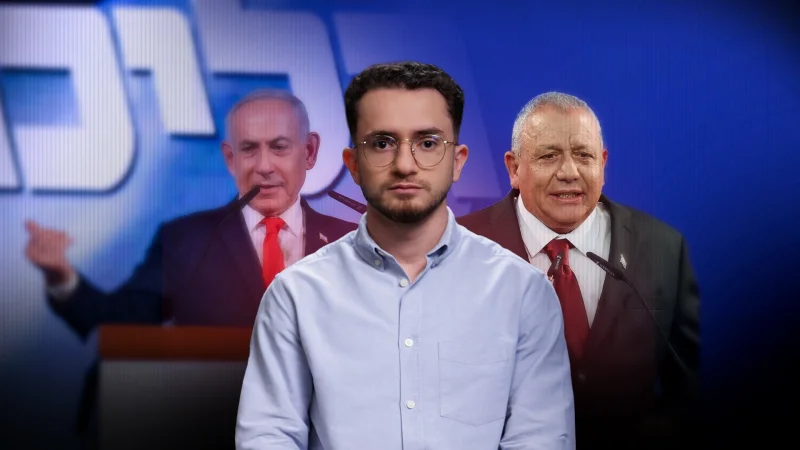
Netanyahu and Eisenkot are locked in a struggle to form a governing coalition in the Knesset, and the fight is now shaping the question of who will form Israel’s next government. Mohammad Saleh has the latest on a contest that has moved from election day arithmetic into a test of who can pull together enough support to govern.
That is why the search around Israel Elections Netanyahu is centered on more than names. It is about power inside the Knesset, where every deal and counterdeal now carries consequences for the next government and for the balance between the two men trying to assemble it.

Netanyahu and Eisenkot remain at the center of a race that is measured less by public declarations than by counts of support inside the Knesset. The struggle is close enough that the coalition math itself has become the story, with each side trying to prove it can turn votes into a governing majority.
At the same time, accusations of foreign interference continue to fly. Officials are brushing them aside as nothing more than attempts to undermine the election results, a dismissal that sharpens the split between those pressing the claims and those treating them as a distraction from the real battle over power.
That friction matters because the argument is no longer only about who won enough backing in the Knesset. It is also about whether the public accepts the result as legitimate while the coalition fight remains unsettled. For now, the most important unanswered question is the simplest one: who will turn that fragile support into a government first.