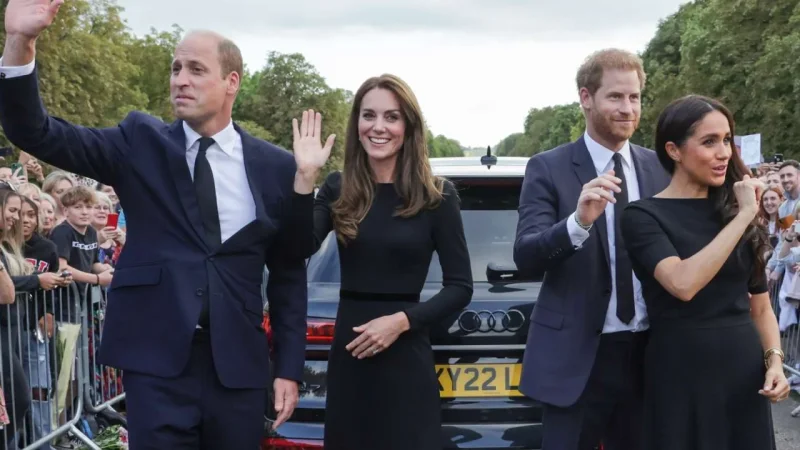
Prince William and Kate Middleton have suggested that Prince Harry and Meghan Markle bring Prince Archie and Princess Lilibet across the Atlantic for a family reunion, a reported outreach aimed at putting the young cousins under one roof. The proposal came ahead of Harry’s visit to London for the 10th anniversary of the Invictus Games.
That timing matters because Harry’s trip has already become a marker for how far the family still is from a reset. He arrived in the U.K. for the milestone service at St. Paul’s Cathedral, while Meghan stayed behind, and King Charles did not meet him during the visit because of a full official calendar.
Tom Quinn said William and Kate had made the suggestion and that the two couples and their families were being urged to make up, but he added that the idea was not leading anywhere so far. In other words, the outreach exists, but there is no sign yet that it has turned into a meeting, a plan, or even a shared timetable.

The backdrop is the same one that has followed Harry and Meghan since they stepped back from senior royal roles in 2020 and built their household in Montecito, California. Harry’s memoir Spare and later broadcast interviews widened the divide, turning private strain into a public one that has been difficult to close.
There have been moments when the distance briefly softened. In March 2024, after Kate Middleton’s cancer diagnosis announcement, Harry and Meghan issued a statement saying, “We wish health and healing for Kate and the family, and hope they are able to do so privately and in peace.”
Harry has also given a reason, in plain words, for why he keeps looking back toward Britain. He said being able to put the kids in a British school has meant a lot to him, adding, “I didn’t know how important it was to me.” That makes the reunion idea more than symbolic: it touches the children, the place, and the future shape of the family relationship.
August was also the month Harry and Meghan made the decision to relocate to the U.K., ending their four-year chapter as full-time California residents. But the latest outreach shows that even when the households are in contact, the practical path back together is still unclear, and the children may be the strongest reason to try again.