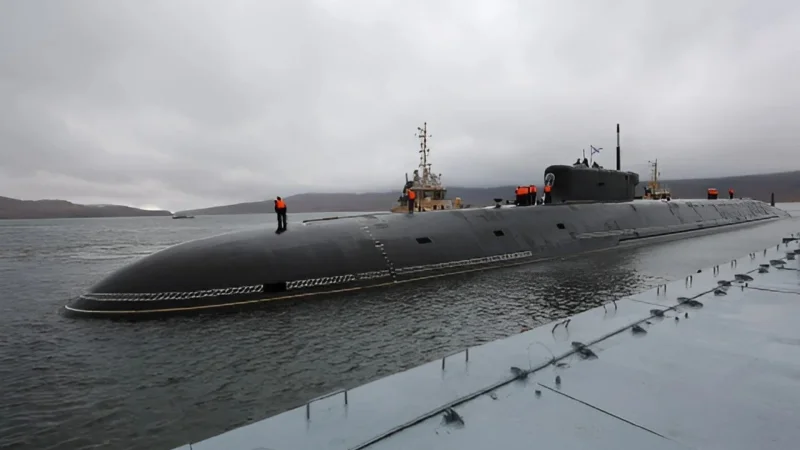
Russia said on Wednesday that it test-launched a Bulava intercontinental ballistic missile from the Generalissimo Suvorov submarine in the Sea of Okhotsk, a strike drill that put one of Moscow's nuclear-capable weapons back in view. The missile was aimed toward the Chizha testing range in Russia's Arkhangelsk Region.
The Bulava can travel more than 5,000 miles, or 8,000 kilometers, and each Borei-class submarine can carry up to 16 of the missiles. That gives the launch a scale that goes well beyond an ordinary weapons trial: it was a reminder that Russia is still practicing the delivery system for a nuclear strike, not just showing off a single missile.

The timing is what made the launch land so hard. On the same day, Finnish President Alexander Stubb and Norwegian Prime Minister Jonas Gahr Støre said they had spoken with Vladimir Putin, and the Finnish government said the call was meant to discuss the Ukraine war and planned three-way talks between Moscow, Washington and Kyiv in Abu Dhabi next month. The Kremlin said Norway and Finland had requested the conversation.
That call quickly exposed a split that has run through Europe since the war began. Putin used it to accuse the European Union and NATO of drawing out the conflict through confrontational policies, while several European leaders made clear they did not want direct contact to be normalized. Mette Frederiksen said she was very skeptical and said Europe should stay together instead of going solo. Donald Tusk called for absolute caution and vigilance. Kęstutis Budrys said engaging with Putin one by one and without a clear agenda had never worked for Europe. Ulf Kristersson said he had low expectations and had not been informed in advance.
Stubb and Støre said they had consulted thoroughly with their partners, but not as spokespeople for Europe as a whole. That leaves the clearest question hanging over the launch and the phone call together: whether Moscow's missile test was simply a routine show of force, or a pointed backdrop to a rare diplomatic opening that has already divided Europe over how far to go in talking to the Kremlin.