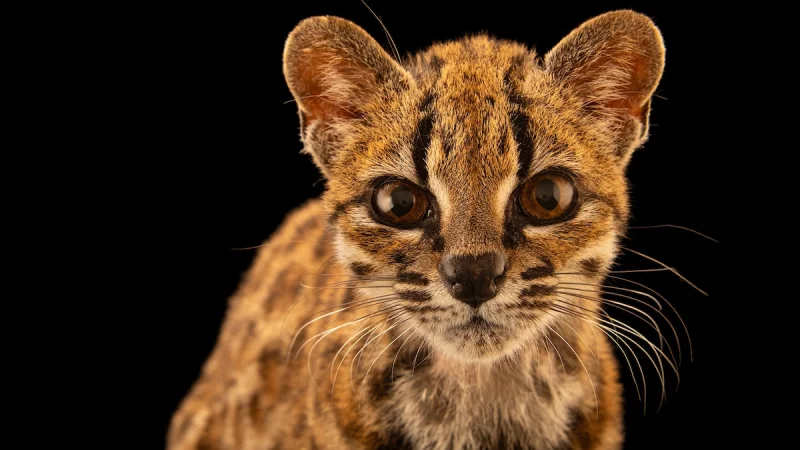
Scientists disclosed this week that a tiny spotted cat found in the Bolivian Yungas forest is a brand-new species, Leopardus tilcayo, now known as the tilcayo tiger cat. It is the first new cat species identified in more than 100 years, a rare find in a group of animals that has been studied for generations.
The discovery matters now because it was just made public by Current Biology, and because the cat itself is strikingly small — smaller than a typical housecat, with spots and round ears that set it apart from better-known felines. For researchers, the name is new, the record is new, and the biological question is immediate: how did a species this distinct stay hidden for so long?

Paola Nogales-Ascarrunz helped uncover the answer after she noticed a tiny cat she first thought was a kitten at a wildlife rehab facility close to La Paz, Bolivia. She volunteers there, and she told News the finding happened “basically by accident.” A man had been caring for the animal by feeding it rice and eggs before giving it up when he could no longer look after it. Genetic testing later showed that the cat was not a known species at all, but one never before discovered or documented.
That is what makes the finding more than a naming exercise. The cat was identified from one animal brought into care, yet its numbers in the wild remain unknown. Nogales-Ascarrunz said it is currently unknown how many of the cats remain in the wild, which leaves the discovery half-finished in the way field biology often is: a species can be named before anyone can say how many are left, or whether it is already under pressure where it lives.
For now, the tilcayo tiger cat is real, classified and counted as the first new cat species in over a century. What remains unresolved is the simplest question of all: whether the Bolivian Yungas forest still holds a living population large enough for the species to survive on its own.