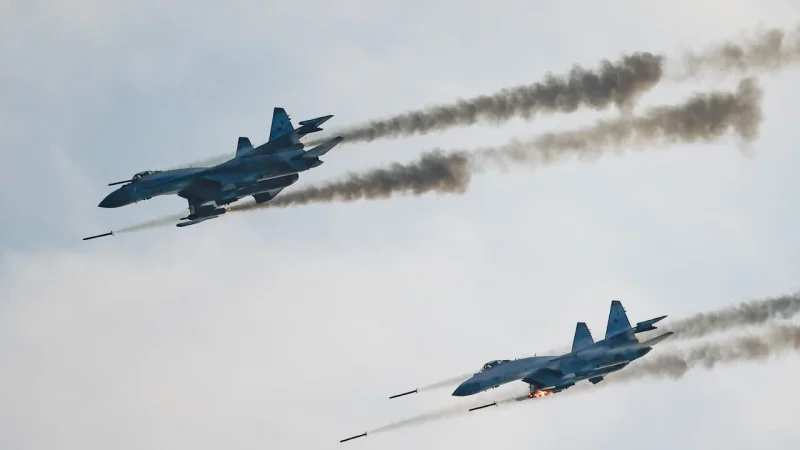
Iran will receive Russian-made Sukhoi Su-35 fighter jets after the US-Iran war ends, Revolutionary Guards spokesman General Mohammad Akraminia said on Sunday, putting a delayed arms deal back on the record at the moment the fighting is still shaping Iran’s military plans.
Akraminia said the IRGC had already completed the procurement process and signed the contracts before the war began at the end of February. He added that pilot training and instruction were also finished, leaving no remaining hurdle on the Iranian side when the fighting started.
That is why the disclosure matters now. It suggests the jets were far enough along in the pipeline to be expected before the war, yet they never arrived. Akraminia said they were meant to come before the fighting, but he did not explain why the transfer did not happen before the conflict broke out.

He said Iran will receive the aircraft after the war and use them to upgrade its air fleet. He also said the IRGC plans to roll out more advanced aircraft, including the Su-35, while Iran works to develop ground-based and airborne radar systems and satellites to strengthen its air defenses.
Akraminia tied the aircraft plan to a broader military buildup that is still being shaped by sanctions and battlefield conditions. He said US sanctions have made it difficult to rebuild Iran’s military, and he argued that advanced aircraft such as the Su-35 can only reach their full operational potential when supported by ground systems, airborne systems and satellite capabilities.
The broader context is that the Su-35 is Russian-designed and produced by Sukhoi, part of United Aircraft Corporation, and Iran’s planned purchase fits a pattern of trying to modernize its air fleet under pressure. Akraminia said Iran has built up many of its capabilities domestically, but he presented foreign procurement as a way to accelerate access to advanced technology.
What remains unclear is the same point Akraminia left hanging: if the deal was already complete and the jets were supposed to arrive before the war, what held them back. Until that is answered, the story is not about a new aircraft on the tarmac, but about a transfer that was ready, delayed and now pushed to after the war ends.