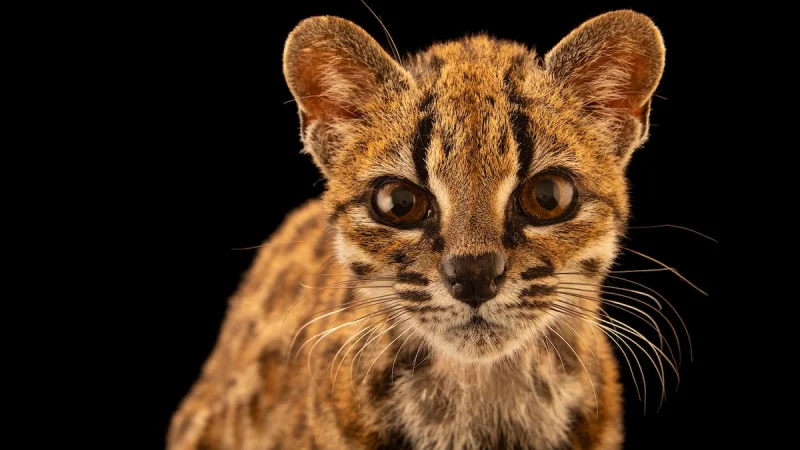
A small spotted cat from Bolivia has been identified as a new felid species, and scientists say it is the first new member of the cat family found in more than 100 years. In a study published in Current Biology, researchers proposed the name Leopardus tilcayo for the animal long mistaken for Leopardus tigrinus.
The discovery is landing now because it changes the family tree of one of South America’s little spotted cats and gives a formal name to an animal that had been hiding in plain sight. For Paola Nogales-Ascarrunz, it began with a call in 2016 from a local wildlife sanctuary about a weird cat. A local man had found the kitten on a road near a forest, kept it at home for about a year, then brought it to Senda Verde, where Nogales-Ascarrunz visited the animal on the subtropical flank of the Bolivian Andes.

She thought at first that it was Leopardus tigrinus. By 2019, though, she was looking at a guidebook reference photo from neighboring Brazil and knew something was off. “I took a hundred pictures of it,” she said. “I was so fascinated.” Her team then used genetic analysis to place the cat in a distinct branch of the cat family tree, rather than with the species it had been assumed to be for years.
The name matters locally as well. The cat is known as tilcayo, and Nogales-Ascarrunz said that when asked why it carries that name, the answer was simple: “I don’t know! My grandpa called it tilcayo, so I call it tilcayo.” Scientists say Leopardus tilcayo lives in Bolivia’s Yungas forest ecoregion on the eastern slope of the Andes Mountains, which means the animal is tied to a smaller range than once believed.
That narrower picture also leaves big gaps. Researchers still do not know what these cats eat, what eats them, how they reproduce, or much else about their lives. The find may be the start of more such work on small cats in the region, but for now the clearest result is already on the page: a Bolivian cat once filed under an older name now stands on its own as Leopardus tilcayo.