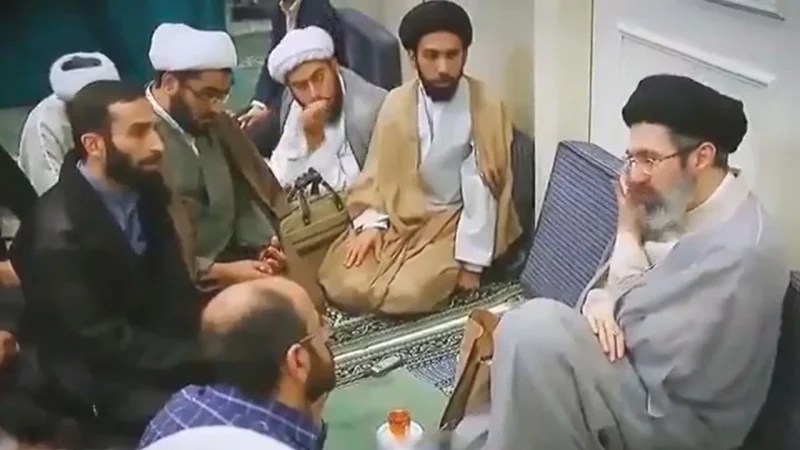
Ayatollah Mojtaba Khamenei used a written message on Sunday to tell Gulf rulers to identify their real enemy and understand the plans meant to confront it, casting the appeal as part of a wider call for Muslim unity. The statement, issued in commemoration of Islam’s Prophet Mohammed, said Muslims should defend one another against their enemies.
The timing is why the message is drawing attention now. Khamenei’s note landed while Iran’s foreign minister was again talking up regional diplomacy, a pairing that makes the public message sound less like a one-off religious reflection and more like a political signal aimed at the neighborhood. For readers searching for the real meaning of the statement, the answer begins with who was speaking and when: on Sunday, after months out of public view following the opening strikes of the last Israel-Iran war, Khamenei reappeared with a message that mixed theology with strategy.
He wrote that Muslim unity in the face of the world’s disbelief is a Quranic strategy and a basic teaching of the pure Islam of Prophet Mohammed, not something superficial or temporary. In plain terms, he presented unity as both doctrine and defense, and he directed that message toward Gulf rulers without naming them one by one.

That political edge sits beside a separate track of Iranian outreach. On last Tuesday, Foreign Minister Abbas Araghchi said Iran’s commitment to peace and stability is matched by steadfast diplomacy with neighbors, and he said he had been meeting representatives from neighboring nations, notably Oman and Pakistan. He added that regional solutions were stressed in talks with Pakistani and Omani guests, and that a proposed framework for a new corridor, joint mine-clearing and future management of Hormuz showed what that approach could look like.
Araghchi widened that message on Friday, saying he had met Qatar’s foreign minister and that putting diplomacy back on track isn’t impossible. He also said the United States should build trust, speak respectfully, acknowledge Iran’s rights and uphold commitments. That line runs through the same regional argument Khamenei was making from another angle: one says Muslim unity is a duty against common enemies, while the other says pressure from the United States does not work and that neighbor-to-neighbor talks are still the practical path forward.
The two messages do not cancel each other out, but they do point in different directions. Khamenei spoke of mutual defense and a shared front, while Araghchi described a web of talks with Oman, Pakistan and Qatar that could support a corridor, mine-clearing and the future management of Hormuz. The result is a familiar Iranian split in style but not necessarily in aim: hard language for the larger confrontation, careful diplomacy for the region around it.
What happens next is less clear than the message itself. No concrete response from Gulf rulers was spelled out, and no new step was announced beyond continuing contacts with neighbors. That leaves the Sunday statement as both a warning and an opening, with Iran pressing unity in public while its diplomats keep testing how far regional talks can go.