


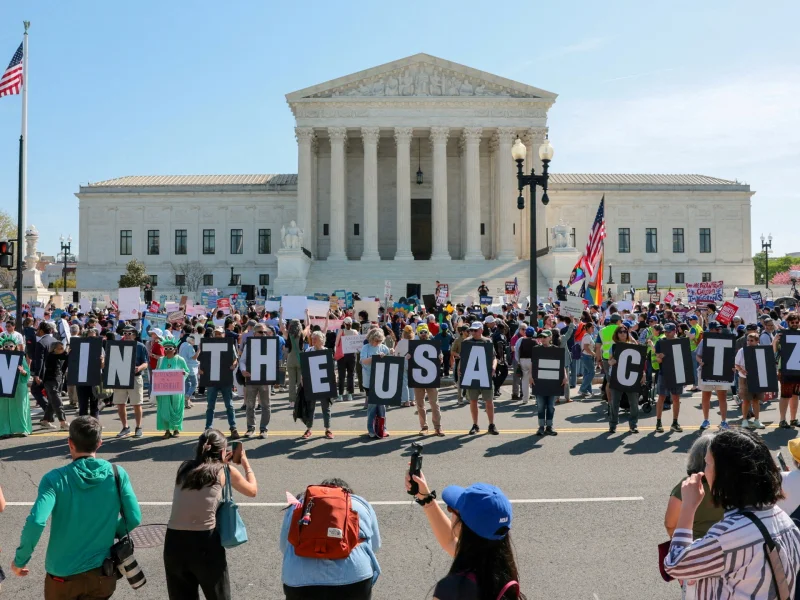
Donald Trump said on Wednesday he will ask the Supreme Court to rehear its recent ruling against his effort to restrict birthright citizenship, keeping alive a fight the court has already decided against him. In a post on Truth Social, he called the decision "too bad for our country" and said he would seek a rehearing "IMMEDIATELY."
The move lands because the ruling was not close. The court rejected Trump’s order in a 6-3 decision, finding it ran against the US Constitution’s 14th Amendment language that covers people born in the US and "subject to the jurisdiction thereof." Cecillia Wang of the American Civil Liberties Union said the decision "reaffirms a fundamental American promise – if you are born here, you are a citizen," a line that captures what was at stake for families whose children would have been denied citizenship under Trump’s order.

Trump signed the executive order on January 20, 2025, the day he took office, seeking to bar children born in the US to parents on temporary legal statuses or without documentation from automatically receiving US citizenship. A Migration Policy Institute-Penn State study released in May of last year said the order would have left an estimated 255,000 infants a year without citizenship and could have increased the undocumented population by 2.7 million by 2045. Those figures are why the case has stayed so politically charged: it reaches far beyond one policy fight and into who is counted as American at birth.
But Trump’s next step faces a steep climb. The Supreme Court rarely grants requests to rehear cases, and it has been decades since the court last allowed a retrial after issuing a ruling in an argued case. That makes the legal path narrow even before the politics are considered, especially after the majority signaled that a constitutional amendment would be required to change the rule at the center of the case. Trump has also urged Republicans in Congress to pass legislation constricting birthright citizenship, suggesting he is pursuing both a courtroom and a legislative route after losing the first round.
The court has recently handed Trump several immigration victories, including decisions that allowed him to effectively do away with special legal status for some crisis-hit countries and use a tactic of physically blocking asylum seekers from stepping on US soil. That makes this latest defeat more notable, not less: the justices were willing to side with him on other immigration moves, but not on a claim that cuts against the Constitution’s citizenship language. For now, the ruling stands, and the next test is whether the Supreme Court will even agree to look at it again.
