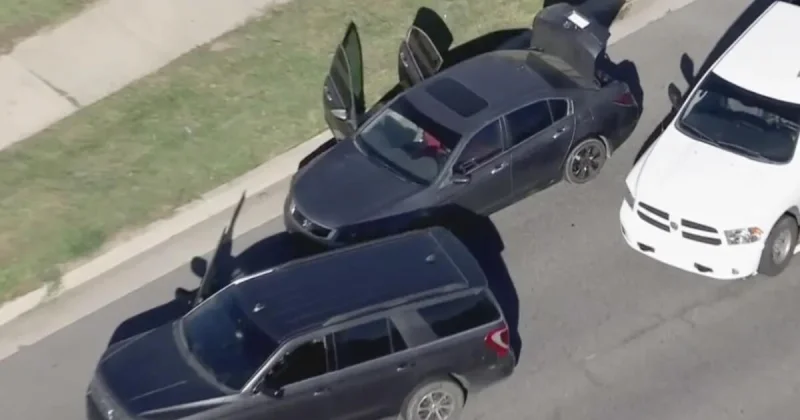
Carlos Jimenez filed a lawsuit on November 6 seeking more than $25 million after he was shot by an ICE officer during an immigration operation in Southern California. The 54-page complaint says federal agents used excessive force and later relied on fabricated evidence to try to prosecute him.
The complaint names the Trump administration, ICE Enforcement and Removal Operations officer Eusebio Ortiz, two Customs and Border Protection officers identified as N. Jimenez and S. Cosey, FBI Special Agent Banuelos, San Bernardino County and 20 unidentified defendants. Jimenez says he was shot in the back and shoulder while trying to drive away after approaching federal agents to warn them that children would soon be gathering at a nearby school bus stop.
That filing is the newest turn in a case that now reaches beyond the shooting itself. Jimenez says he was taken to Riverside Community Hospital as a trauma patient with gunshot wounds, a displaced fracture of his right shoulder blade and fragments still lodged near his right lung. He also accuses FBI agents of interfering with his medical treatment after the shooting, saying they removed him from his hospital bed, handcuffed him with a leather waist restraint and drove him back to the scene for interrogation while the bullet and fragments remained in his body.

Federal officials tell a different story. A Department of Homeland Security spokesperson said Jimenez was not the target of the operation, pulled his vehicle in front of ICE officers, was ordered to leave and then reversed directly at them. The spokesperson said an ICE officer, fearing for his life, fired defensive shots at the vehicle before Jimenez fled and abandoned it. Jimenez's lawyer rejects that account and says he was attempting a three-point turn after being told to leave and had begun moving forward when he was shot. The complaint adds that Ortiz first pointed a firearm at Jimenez and threatened to shoot him if he did not leave, then put the weapon away and displayed pepper spray before firing several rounds through a rear passenger-side window as Jimenez tried to turn his Lexus around.
The clash over what happened will now have to be tested in court, where the question is not only whether the shooting was justified but whether the government can defend the account it has already given. The case lands amid broader scrutiny of federal immigration enforcement under President Donald Trump's second term, with complaints of excessive force, racial profiling, unlawful arrests and due process violations mounting and some enforcement episodes later undercut by video or witness accounts. One recent example came in February 2026, when two ICE officers were suspended and investigated after DHS said video evidence suggested they had made untruthful statements under oath about a shooting in Minneapolis.
For Jimenez, the lawsuit is both a demand for damages and a bid to force a federal reckoning over how the shooting was handled from the roadside to the hospital bed. What remains unresolved is whether a court will accept the government's version, Jimenez's version, or decide that the record already shows a failure far more serious than a disputed use of force.