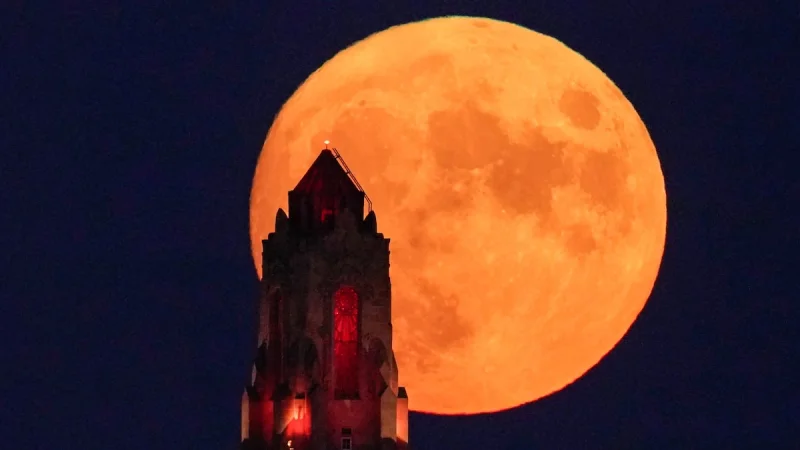
May’s full moon will hit peak illumination at 8:45 a.m. UTC on May 31, and it comes with two uncommon labels at once: a blue moon and a micromoon. The moment is unusual not because the moon will change color, but because two separate lunar classifications overlap on the same full moon.
That is why skywatchers are looking for Blue Moon May 2026 now. The moon will not actually look blue, even though the name has stuck for centuries, and Seth McGowan explained that the term is calendrical, not visual. He said a “blue moon” doesn’t refer to color, but to timing, and that the definition is older, coming from traditional almanac usage.
Under one accepted definition, a blue moon is simply the second full moon in a calendar month, and May’s event falls under that monthly rule. There is also a seasonal definition: the third full moon in an astronomical season that contains four full moons instead of the usual three. Blue moons turn up only every two to three years, which is part of what makes the May 31 event stand out on this year’s lunar calendar.
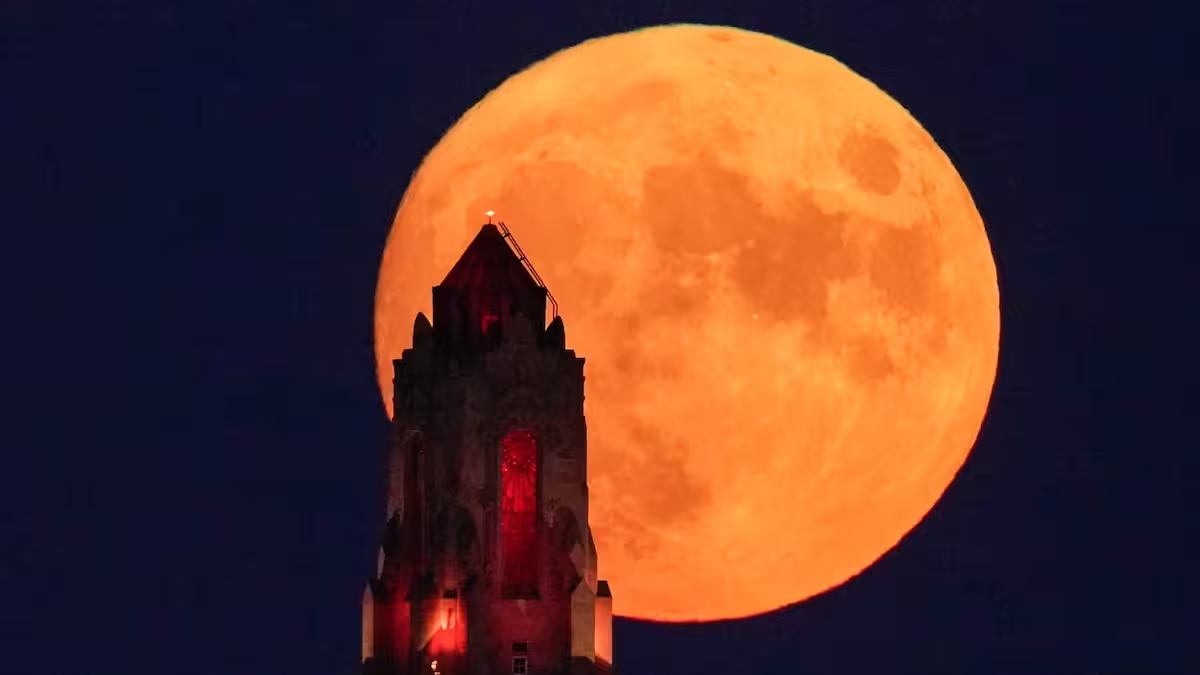
The micromoon is the other half of the story. It happens when a full moon lines up with apogee, the farthest point in the moon’s orbit from Earth. That is the opposite of a supermoon, which is a full moon at perigee, when the moon is closest to Earth. In practical terms, the micromoon can appear roughly 10 to 15 percent smaller in apparent diameter than a supermoon, although that difference is subtle to the naked eye.
McGowan said most casual observers would not notice the difference without a side-by-side comparison, but careful observers or photographers can detect it. That is the friction in this month’s lunar event: the name sounds dramatic, but the sky will not deliver a blue disk, and the size change will be easy to miss unless someone is already looking closely. The best chance to see it is after moonrise on May 30 or in the early morning hours of May 31, depending on location.
No telescope is necessary to watch the moon, though binoculars can help reveal craters and the dark volcanic plains known as maria. The next fixed moment is May 31 at 8:45 a.m. UTC, when the moon reaches its peak, and the rest depends on local weather, moonrise and how carefully people are watching.