


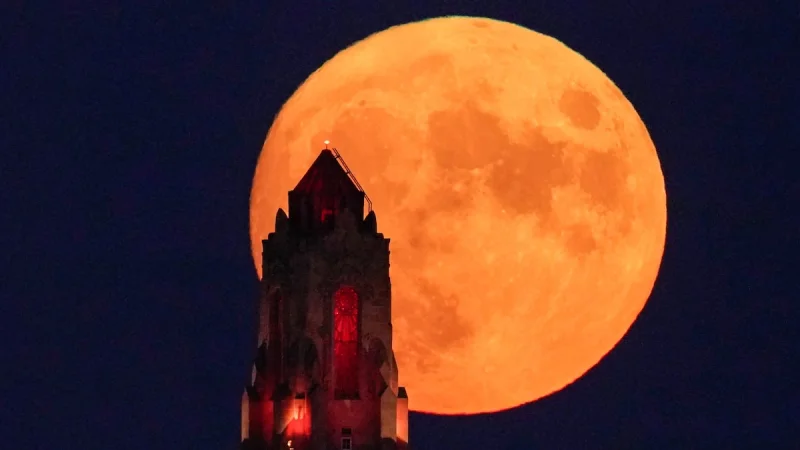
May’s full moon will reach peak illumination at 8:45 a.m. UTC on May 31, and this one comes with a double distinction: it is both a blue moon and a micromoon. For skywatchers, that means a full moon that is rare by calendar and slightly shy by distance, arriving at the end of May with just enough difference to matter to careful observers.
The search for the moon is straightforward today because the timing is fixed and the label is unusual. The most widely known meaning of a blue moon is the second full moon in a calendar month, and May’s event fits that definition. Seth McGowan explained that a blue moon does not refer to color at all, but is a calendrical term rooted in traditional almanac usage.
That old usage is why the phrase still trips people up. A blue moon can also mean the third full moon in an astronomical season that contains four full moons instead of the usual three, but May’s event falls under the monthly definition. Blue moons come around only every two to three years, which is part of what gives the May 31 full moon its draw even before the micromoon label enters the picture.
The micromoon side of the event is more subtle. It happens when a full moon coincides with apogee, the point in the moon’s elliptical orbit when it is farthest from Earth. That can make the moon appear slightly smaller and dimmer than a typical full moon, and McGowan said most casual observers would not notice the difference without a side-by-side comparison, though careful observers or photographers can detect it. A supermoon is the opposite case, when a full moon lines up with perigee.
There is, though, one bit of language that does more work than the sky itself will. The moon will not actually turn blue, even with the blue moon name attached, and that mismatch is part of the appeal. The term has existed long enough to outlast the misconception, while the visual change from a micromoon is modest enough that many people will need a comparison to spot it. The moon’s orbit shifts its distance from Earth slightly throughout each pass, so the effect is real even if it is not dramatic.
For anyone hoping to catch it, the best viewing window begins after moonrise on May 30 or in the early morning hours of May 31, depending on location. No telescope is necessary to look at the moon, which means the event is available to anyone who steps outside at the right time. The full moon peaks later on May 31, but the first good look is likely to come before that, when the moon is up and the difference is easiest to judge.
That leaves the simplest answer to the question behind the buzz: yes, May’s full moon is a blue moon and a micromoon, but the blue part is in the calendar and the micro part is in the view. The rare overlap makes the last days of May worth a look, even if the sky never gives away the blue.
