


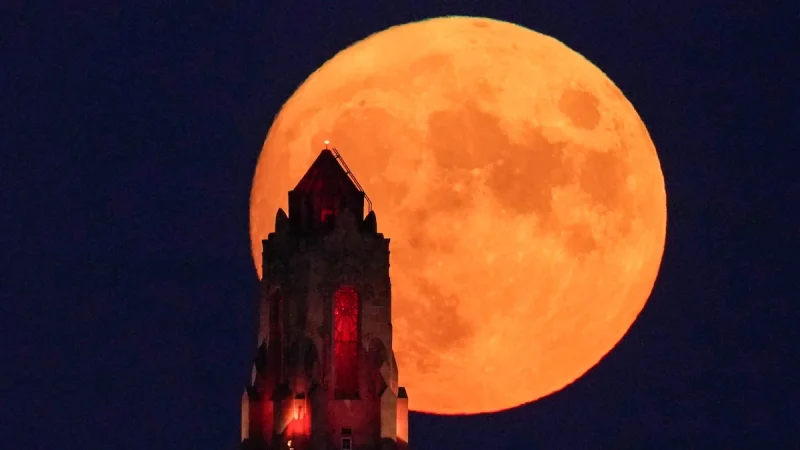
May’s full moon will arrive on May 31, 2026, with a rare double designation that gives skywatchers two reasons to look up. It will peak at 8:45 a.m. UTC, and it will be both a blue moon and a micromoon. The moon will not actually look blue.
The blue moon label comes from the calendar, not the color. In this case, May’s event is a monthly blue moon because it is the second full moon in a calendar month. The event also fits the micromoon description because the full moon coincides with apogee, the point in the moon’s orbit when it is farthest from Earth.
That matters because a micromoon can appear roughly 10 to 15 percent smaller in apparent diameter than a supermoon, which occurs when a full moon reaches perigee, the closest point in the moon’s orbit to Earth. Blue moons happen every two to three years because the lunar cycle lasts about 29.5 days, and the calendar occasionally squeezes in an extra full moon. A seasonal blue moon follows a different rule: it is the third full moon in an astronomical season that contains four full moons instead of the usual three.
Seth McGowan, who has explained the term in public-facing astronomy discussions, put it plainly: “A ‘blue moon’ doesn’t refer to color. It’s a calendrical term.” He added, “This definition is older and comes from traditional almanac usage.”
For people hoping to catch the sight, timing matters more than the label. The best viewing window for the micromoon is after moonrise on May 30 or in the early morning hours of May 31, depending on location. Binoculars can help reveal craters on the lunar surface and the dark volcanic plains known as maria.
The blue-moon name has occasionally been tangled up with color, but that is a different phenomenon. Smoke and ash from major volcanic eruptions or large wildfires can make the moon appear blue-ish, which is not what is happening here. A historical example came in 1883, when observers around the world reported blue-tinged moons after the eruption of Krakatoa.
That is the oddity of May 31: the moon will not change color, but it will carry two uncommon labels at once. For skywatchers, the better question is not whether it will look blue. It is whether they will catch the smaller-than-usual full moon at the right moment, before the month slips away.
