


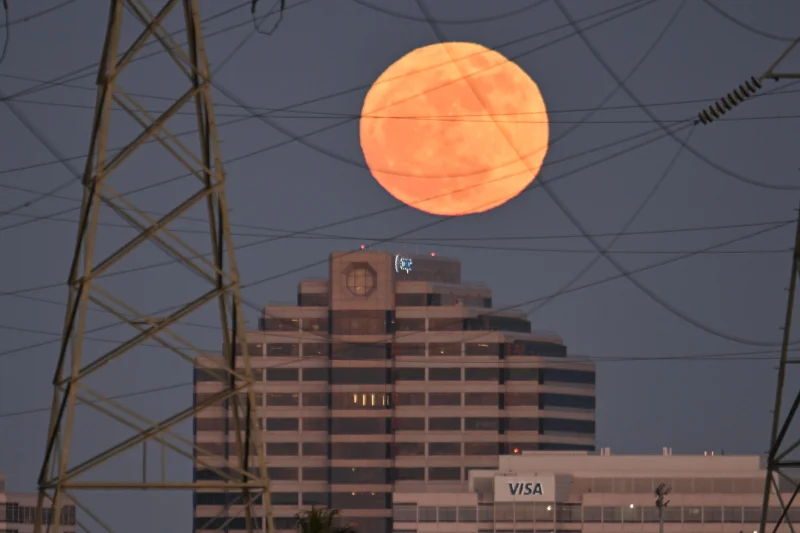
Skywatchers will get a rare two-for-one lunar event on May 31, when May’s full moon peaks as both a blue moon and a micromoon at 8:45 a.m. UTC. It will not actually turn blue. The moon will simply carry the name, even as it appears a little smaller and dimmer than a typical full moon.
The timing is what makes this one worth a look now. May’s full moon reaches peak illumination on May 31, and that date folds two uncommon lunar conditions into the same night: a monthly blue moon, meaning the second full moon in a calendar month, and a micromoon, which happens when a full moon lines up with apogee, the point where the moon is farthest from Earth.
Seth McGowan said the phrase “blue moon” does not refer to color at all, but is a calendrical term rooted in older almanac usage. That distinction matters because the moon will look ordinary to the naked eye, even though the label sounds dramatic. Blue moons, whether monthly or seasonal, come around only every two to three years, while the moon’s changing distance from Earth gives each full moon its own subtle scale.
The size difference is real, but it is not obvious from the ground. A micromoon can appear roughly 10 to 15 percent smaller in apparent diameter than a supermoon, which is a full moon at perigee, yet McGowan said most casual observers would not notice unless they had a side-by-side comparison. Careful observers and photographers are more likely to spot it, especially with binoculars, which can bring out craters and maria on the lunar surface.
The best viewing window is after moonrise on May 30 or in the early morning hours of May 31, depending on location, when the moon should still be easy to catch before daylight takes over. The event is drawing attention because it combines a rare name and a subtle visual change in the same sky, but the real trick is knowing what to expect: not a blue disk, just a full moon with a little less presence than usual.
That leaves the simple question for anyone stepping outside: whether the difference will be enough to notice without help. For most people, the answer will probably be no. For skywatchers with binoculars or a camera, the May 31 micromoon offers a better chance to see how much the moon’s elliptical orbit changes what we think of as a full moon.
