


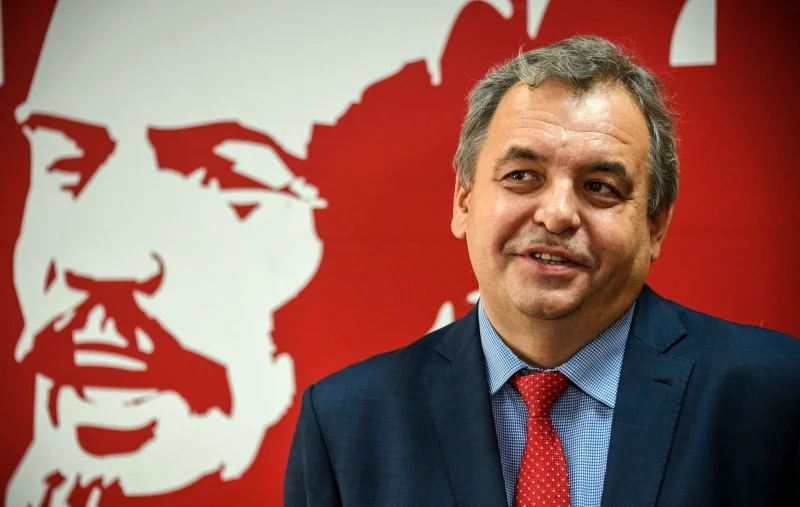
Russian lawmaker Renat Suleimanov warned on May 19 that the economy of Russia cannot sustain a prolonged war in Ukraine, saying Moscow needs the swiftest possible end to what it calls its special military operation. He said the country's finances will not withstand a long continuation of the conflict.
Suleimanov, who represents Novosibirsk Oblast in the State Duma, said defense and security spending now makes up around 40% of Russia's federal budget. He said that military outlays are feeding inflation while cutting into social spending and investment, and argued that military-sector goods have no consumer value.
The warning lands as Russia's approved 2026 federal budget sets military spending at 12.93 trillion rubles, or about $141 billion, and raises that figure to 16.84 trillion rubles, or about $184 billion, when broader security and law enforcement costs are included. That broader total is roughly one and a half times higher than Russia's total social spending.
Suleimanov's comments were published ahead of upcoming State Duma elections, and he used the interview to describe the Communist Party as the only real opposition in the country. He also said that if the defense sector is reduced, a million people will return to civilian life, asking where the jobs, decent salaries and social adaptation will come from.
The remarks are striking because Suleimanov has previously publicly backed Russia's invasion of Ukraine and has been sanctioned by the EU, the United States and Britain. Russian independent outlet Agentstvo described the comments as likely the first public statement of this kind by a sitting State Duma deputy, a sign that the economic cost of the war is becoming harder to avoid even among politicians who have supported it.
For now, the numbers tell the story more clearly than the rhetoric. Russia is still funding the war at a level that swallows an extraordinary share of state spending, but Suleimanov's warning suggests the pressure is no longer only on households and firms. It is reaching into parliament itself.
