


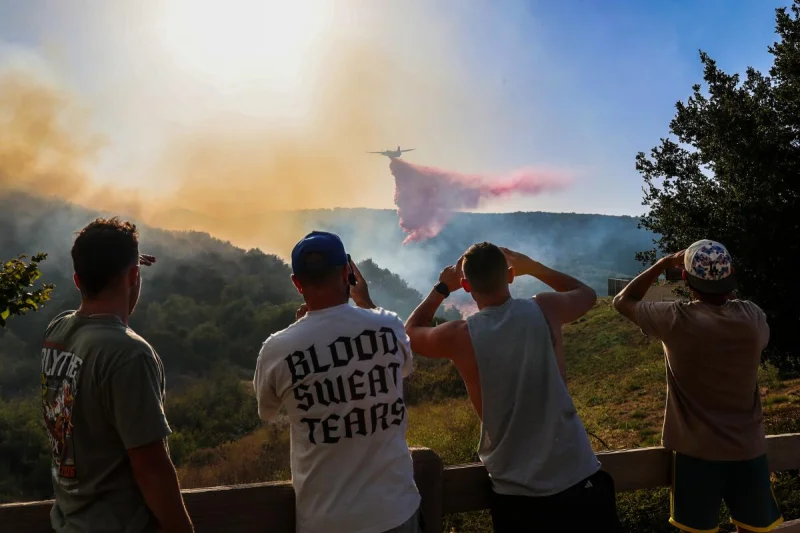
The Sandy Fire burning near Simi Valley, California, has grown to 2,115 acres and is 22% contained, with evacuation orders still in place for several neighborhoods after the wind-driven blaze threatened homes northwest of Los Angeles. The fire started Monday, May 18, at 1:50 p.m. ET off Sandy Avenue and remains under investigation as firefighters work to strengthen containment lines before shifting winds can push flames back toward populated areas.
Latest Sandy Fire Update
The fire is burning in Ventura County, about 30 miles northwest of Los Angeles, in brushy terrain near Simi Valley and the Santa Susana Mountains. Fire officials listed the blaze at 2,115 acres late Wednesday, with containment improving to 22% after a difficult first two days marked by strong winds, low humidity and fast uphill runs.
The official incident page describes the Sandy Fire as a Ventura County Fire Department incident, not a state-managed Cal Fire incident, though state systems are carrying updates. The agency with jurisdiction remains Ventura County Fire Department.
At least one home has been destroyed, and damage assessments are continuing. No confirmed deaths have been announced. Fire crews have been using air drops, hand crews, engines and structure-defense operations to slow the fire’s spread through dry grass and brush.
Evacuation Orders Remain In Effect
Evacuation orders continue for zones in and around Simi Valley, including parts of Bell Canyon, Burro Flats, Meier Canyon, Santa Susana and several numbered Simi Valley zones. Evacuation warnings also remain in effect for nearby areas in Ventura and Los Angeles counties, including parts of Box Canyon, Calabasas, Hidden Hills and surrounding hillside communities.
An evacuation order means residents should leave immediately because there is an immediate threat to life. A warning means conditions could worsen quickly, and people who need extra time, including families with pets, livestock, medical equipment or mobility limitations, should be ready to leave or consider leaving early.
An overnight shelter has been opened at Rancho Santa Susana Community Park in Simi Valley. Small-animal sheltering is available at Simi Valley Animal Shelter and Camarillo Animal Shelter, while large animals and livestock are being directed to the Ventura County Fairgrounds.
Roads, Schools And Air Quality Affected
The fire has forced road closures across the south and east sides of Simi Valley. Closures include parts of Bell Canyon Road, Katherine Road near the railroad tracks, Clear Springs Road, Oak Knolls Road, Crinklaw Lane and stretches of Santa Susana Pass Road near Box Canyon Road.
Simi Valley Unified School District closed schools because of fire conditions, smoke and evacuation concerns. Smoke from the Sandy Fire and other Southern California fires has also prompted air-quality monitoring and advisories across the region.

Officials are paying particular attention to the fire’s proximity to the Santa Susana Field Laboratory area. Air-quality monitoring equipment has been placed around the fire perimeter to establish background readings and assess changing conditions. The fire had not crossed into the field laboratory property in the latest official update.
What Fueled The Fire’s Rapid Spread
The Sandy Fire grew quickly after igniting Monday morning Pacific time, pushed by gusty winds and dry vegetation. The fire’s behavior has included uphill runs, wind-driven movement and active spread through brush and grass.
Southern California’s terrain makes fires in this area especially difficult. Canyons can channel wind, slopes can accelerate flames, and neighborhoods often sit close to open brushland. That mix creates a wildland-urban interface threat, where firefighters must protect homes while also trying to build containment lines in rugged terrain.
The cause remains under investigation. Early local emergency information referenced the possibility that equipment may have sparked the fire, but officials have not announced a final cause. Investigators will need to examine ignition-site evidence, witness accounts and weather conditions before making a determination.
Firefighters Face A Narrow Weather Window
The improvement in containment suggests crews made progress during calmer overnight conditions, but the threat has not passed. Wind shifts can reopen weak points on the fire line, and dry fuels can reignite even after visible flames diminish.
More than 800 personnel have been assigned to the incident, with crews focused on holding containment lines, protecting structures and preventing the fire from moving deeper into residential areas. Aircraft have been used where smoke and wind allow safe operations.
The Sandy Fire is also competing for attention with other active fires in Southern California, including a major blaze on Santa Rosa Island and fires in Riverside County. That broader fire activity adds pressure to regional staffing, aircraft availability and emergency coordination.
What Residents Should Watch Next
The most important updates will be changes to evacuation orders, containment, acreage and weather conditions. Residents near the fire should use official emergency maps before returning home, even if smoke appears lighter or flames seem farther away.
Containment does not mean a fire is out. It means firefighters have established control lines around part of the perimeter and believe those sections are less likely to spread. A 22% containment figure still leaves most of the fire perimeter uncontained.
The Sandy Fire has already forced thousands of people from their homes and damaged property, but the latest containment gain is a meaningful step. The next 24 to 48 hours will determine whether crews can turn that progress into a stable perimeter or whether renewed winds bring another round of evacuation pressure across Simi Valley and nearby canyon communities.
