



Morgan Ortagus warned Wednesday that Iran may be using the latest round of nuclear talks to buy time as President Donald Trump pauses planned military strikes and extends a fragile ceasefire to give diplomacy more room to work.
Speaking to Digital, Ortagus said Iran has long treated negotiations as a delay tactic, arguing that the regime tries to preserve leverage while pressure builds. “It’s the tactic of the regime to stall, to draw negotiations, to buy time,” she said. “I would encourage the president not to fall into the trap that the Iranians like to do … which is to drag things out to buy time.”
Her warning lands as the Trump administration keeps pressing Tehran over both its nuclear program and its regional proxy network. Trump recently paused planned strikes and extended diplomatic talks with Iran after Gulf allies pushed for more time for negotiations, a move that has left the White House leaning harder on talks even as it keeps the threat of force in view.
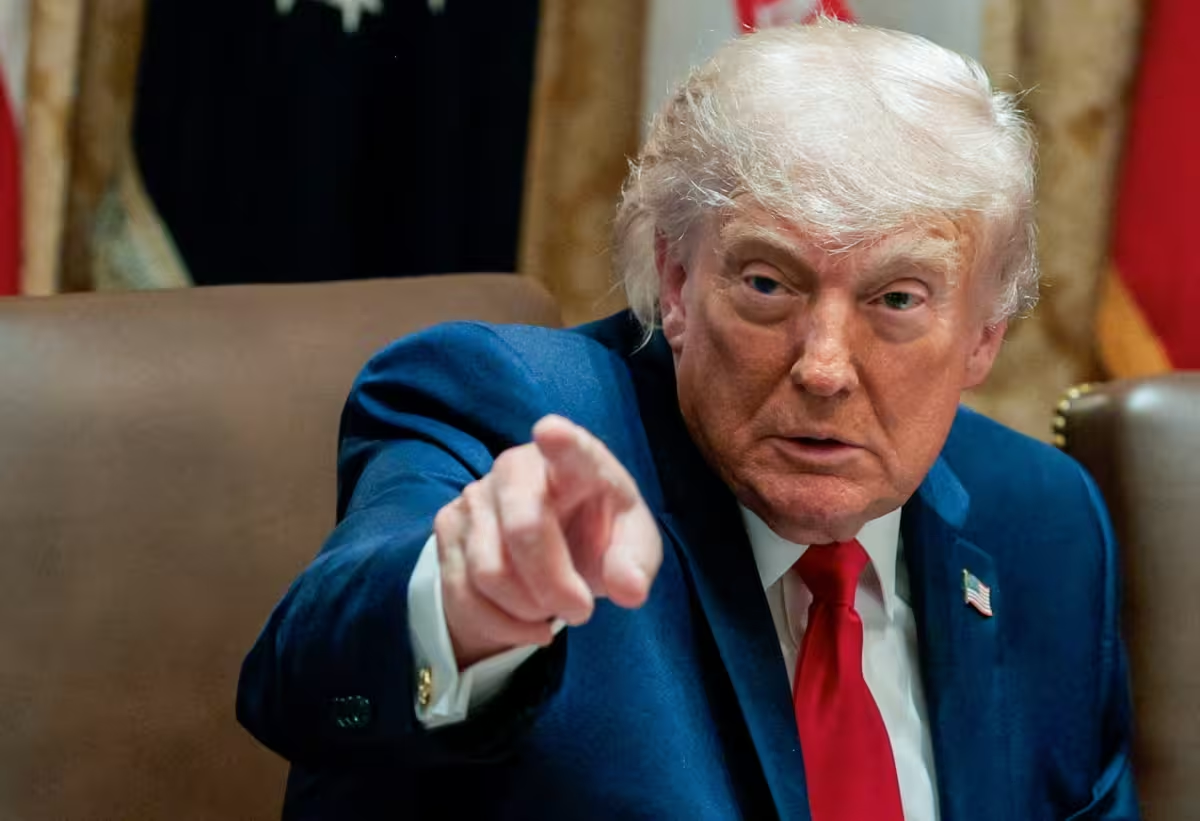
The exchange fits a longer argument over Iran that has defined U.S. policy for years. Critics of past negotiations have long said Tehran used diplomacy to stretch out deadlines while continuing work on parts of its nuclear program. Trump broke with that approach in 2018, when he withdrew from the Obama-era Joint Comprehensive Plan of Action and called it a “disastrous” agreement that failed to permanently curb Iran’s nuclear ambitions.
Ortagus said the current team has more room to maneuver than its predecessors. “I’m always hopeful in President Trump’s ability to give his negotiating team leverage,” she said, adding, “I think this negotiating team has more leverage in their negotiations with Iran than any negotiating teams that preceded them.” She also said, “The president has seriously degraded them in a way that no one has since the Islamic Republic’s founding,” referring to Iran.
That leverage still runs into a hard stop. Iranian officials have rejected demands for zero enrichment, and they continue to argue that Tehran has a sovereign right under international law to maintain a civilian nuclear program. For now, the talks are moving forward under that collision of pressure, suspicion and limited trust.
Ortagus also said Hezbollah, not Lebanon itself, remains the biggest obstacle to peace between Israel and its neighbors, underscoring how closely the nuclear file is tied to Iran’s wider regional reach. The next test is whether Washington can keep Tehran at the table without giving it the time critics say it has repeatedly used to breathe, regroup and wait out pressure.
