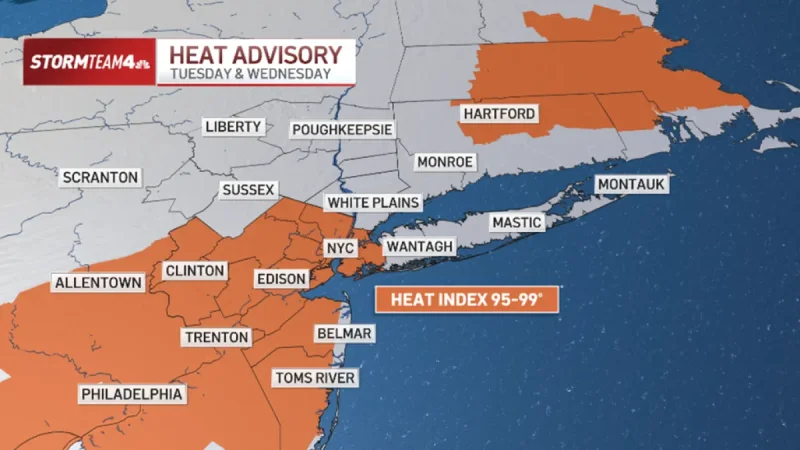
A heat advisory is in effect across parts of the Northeast as an early-season burst of summerlike heat pushes temperatures into the 90s and raises the risk of heat-related illness before many communities have fully adjusted to warmer weather.
The National Weather Service has warned that heat index values could climb into the mid-to-upper 90s on Tuesday, May 19, with advisories covering parts of New York, New Jersey, Connecticut, Massachusetts and New Hampshire. Some alerts are scheduled to run from 11 a.m. ET Tuesday through 8 p.m. ET Wednesday, while others expire Tuesday evening depending on location. The timing is notable because dangerous heat is arriving before the official start of summer, when schools, outdoor workers and older residents can be especially vulnerable.
Where The Heat Advisory Is In Effect
The advisory area includes heavily populated parts of the New York City metro region, inland Connecticut, northern New Jersey and sections of southern New England. In parts of New Jersey, including Middlesex, Western Monmouth, Ocean and Southeastern Burlington counties, heat index values near 98 degrees are expected through Wednesday evening.
Northern Connecticut counties including Hartford, Tolland and Windham are also under alert, with inland temperatures forecast to reach the mid-90s. Parts of New Hampshire, including communities around Manchester, Nashua, Portsmouth and coastal Rockingham County, are under shorter-duration advisories Tuesday.
The pattern is not limited to one city. The heat is spread across a broad corridor from the Mid-Atlantic into New England, affecting commuters, school sports, construction work, delivery routes and people without reliable air conditioning.
Why This May Heat Wave Is Raising Concern
Early-season heat can be more dangerous than similar temperatures later in the summer because the body has had less time to adapt. Homes may not yet have cooling systems running, schools may still be operating under spring schedules, and outdoor workers may not have shifted into summer heat protocols.
Inland areas are expected to feel the worst conditions, with the heat index making it feel several degrees warmer than the actual air temperature. Coastal communities may see some relief from ocean influence, but humidity and poor overnight cooling can still make conditions uncomfortable.
Several locations could approach or break daily temperature records. Hartford may challenge a long-standing May 19 record, while parts of Connecticut and the wider Northeast are facing temperatures more typical of July than mid-May.
Air Quality Adds Another Health Risk
The heat is also combining with air quality concerns in parts of the region. Ground-level ozone can rise during hot, sunny weather, especially in urban and suburban areas with vehicle traffic and industrial emissions.
Air quality alerts mean sensitive groups should take added precautions. That includes children, older adults, people with asthma, people with heart or lung disease and anyone who becomes short of breath during outdoor activity. Even healthy adults can feel the effects during strenuous work or exercise in the afternoon heat.
The combination of high temperatures and ozone can make outdoor sports, yard work and long commutes more stressful. Public health guidance typically urges people to shift heavy activity to early morning or evening, when temperatures and ozone levels are lower.

How To Stay Safe During A Heat Advisory
Officials are urging residents to take standard heat precautions seriously, especially during the hottest part of the day. The most important steps are simple but can be lifesaving:
-
Drink water often, even before feeling thirsty.
-
Stay in air-conditioned spaces when possible.
-
Avoid strenuous outdoor activity during the afternoon.
-
Check on older relatives, neighbors and anyone living alone.
-
Never leave children or pets in parked vehicles.
Symptoms of heat exhaustion can include heavy sweating, weakness, dizziness, nausea and headache. Heat stroke is more serious and can involve confusion, fainting, very high body temperature or hot, dry skin. A suspected heat stroke case requires immediate emergency medical help.
Outdoor Workers And Students Face Added Exposure
The advisory creates practical challenges for schools, athletic programs and employers. Outdoor practices, construction projects, road work and delivery schedules may need adjustments to reduce risk during peak heat.
Workplace safety guidance emphasizes frequent breaks, shade, hydration and monitoring for symptoms. New workers, temporary workers and people returning after time away can be more vulnerable because they may not yet be acclimated. Coaches and school staff face similar concerns with students in sports or outdoor activities.
The risk is not limited to people doing intense labor. Long waits at bus stops, poorly ventilated classrooms, apartments without cooling and crowded public events can all become hazardous when heat builds over several hours.
When Relief Is Expected
The worst conditions are expected Tuesday afternoon and, in some areas, again on Wednesday before cooler air begins to move in. Advisory end times vary by location, so residents should follow local alerts rather than assuming the entire region will cool down at the same time.
The broader significance is clear: the season’s first major heat alerts are arriving early, and communities are being asked to treat them as more than an inconvenience. Even when temperatures fall short of extreme warning levels, an early heat advisory can still bring real health risks for vulnerable residents, outdoor workers and anyone caught unprepared during the hottest hours of the day.