


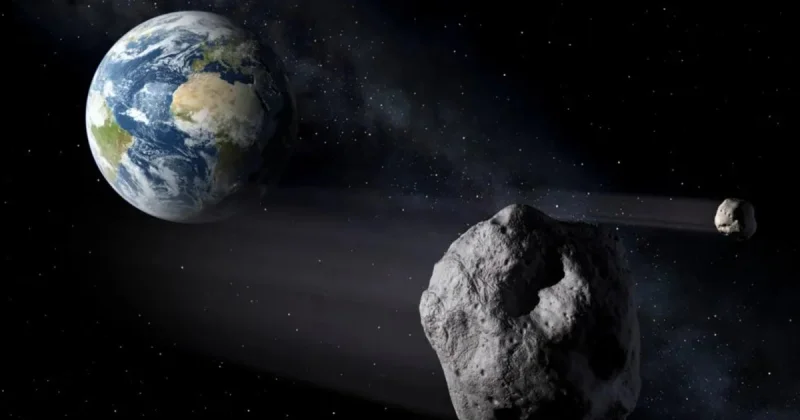
Asteroid 2026 JH2, a space rock about 62 feet wide, is due to glide within about 57,000 miles of Earth on Monday, a close pass that will bring it to peak brightness around 6 p.m. ET. The flyby is close enough that amateur astronomers using small telescopes may be able to catch it, and the Virtual Telescope Project is streaming the event live online.
The asteroid was discovered May 10 by astronomers with the Mount Lemmon Survey, an astronomical project based in Arizona’s Santa Catalina Mountains. Its approach is not expected to pose a threat to Earth, but the distance puts it in a category that draws attention because objects of this size do not pass this close often, even if such encounters are not unprecedented.
What makes the number stand out is the scale of the neighborhood it will cross. The moon is, on average, 238,855 miles from Earth, which means 2026 JH2 will pass at less than a quarter of that distance. Smaller asteroids regularly slip by unnoticed, but this one is large enough to be tracked and bright enough to give skywatchers a rare look at a fast-moving visitor.
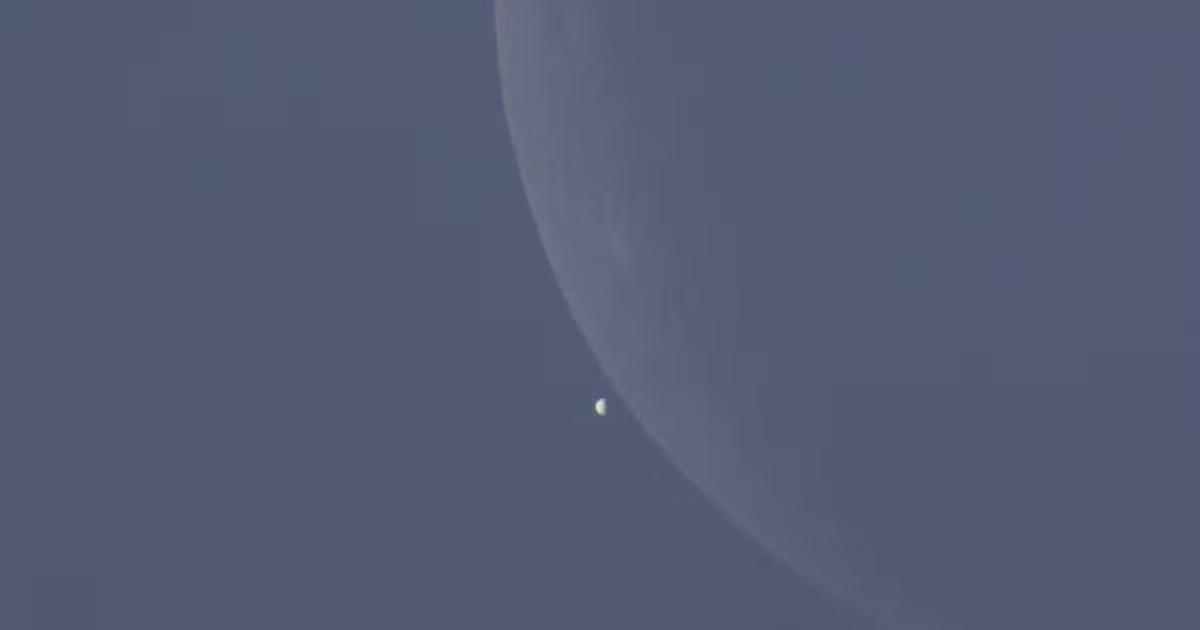
That is the same reason scientists keep watch on near-Earth objects in the first place. NASA’s Near-Earth Object Observations program tracks potentially dangerous asteroids and studies their orbits, using flybys like this one to sharpen predictions and compare one object with another. The 2013 Chelyabinsk meteor, which exploded above Russia, is still the most familiar reminder of what can happen when a rocky body reaches Earth’s atmosphere; NASA said that blast released 30 times more energy than the atomic bomb that destroyed Hiroshima, and estimated the meteor at around 59 feet across.
Not every near-Earth object is a threat, and 2026 JH2 is not expected to become one. Still, its visit lands at a time when another asteroid, Apophis, remains under close watch. Apophis is about 1,200 feet across and is projected to come within 20,000 miles of Earth on April 13, 2029. NASA’s OSIRIS-APEX probe, launched in 2016, is expected to rendezvous with Apophis in June 2029, but the Trump administration’s budget request for fiscal year 2027 would end the mission before that encounter.
For skywatchers, Monday’s flyby is a brief chance to see asteroid 2026 JH2 at its brightest. For scientists, it is another data point in the larger work of keeping track of the objects that move through Earth’s cosmic vicinity, including the ones most people never notice at all.
