Brisbane was lashed by 74 millimetres of rain from midnight on Sunday to 4pm on Monday, topping the city’s average May rainfall and pushing crews to open sandbagging stations as wet weather spread south toward the Gold Coast. Minor flash flooding caused trouble on the Cleveland, Beenleigh and Gold Coast train lines and affected more than 30 roads.
Among the roads hit were the Bruce Highway at Griffin and the Margaret Street off-ramp in the CBD, while most Brisbane suburbs had taken 20 to 40 millimetres by Monday afternoon. Burbank recorded 61 millimetres, Chandler 45, Aspley 46 and Deagon 51, with more than 64 millimetres falling in Alexandra Hills.
Brisbane’s 74 millimetres in less than 17 hours edged above the city’s average May rainfall of about 69 millimetres. The last time Brisbane saw rain like this in May was in 2023, when 70 millimetres fell. The May record remains 182 millimetres, set in 2015 during an east coast low that brought intense rain, high winds and catastrophic flash flooding.

Brisbane City Council opened sandbagging stations in Darra, Lota, Morningside, Newmarket and Zillmere, while Redland City Council set up its own stations in Thorneside, Cleveland and Redland Bay. Sandbagging was also made available on the bay islands as the system kept pressure on low-lying parts of the region.
Harry Clarke said higher falls were expected toward the Gold Coast hinterland, where another 50 millimetres or even 100 millimetres could still accumulate by Tuesday. He said the low would move offshore after Tuesday afternoon. “This is an impressive weather system, and it is relatively unseasonable,” Clarke said, adding: “It’s not flooding rain, more moderate, but certainly the heaviest rain we’ve had in a while.”
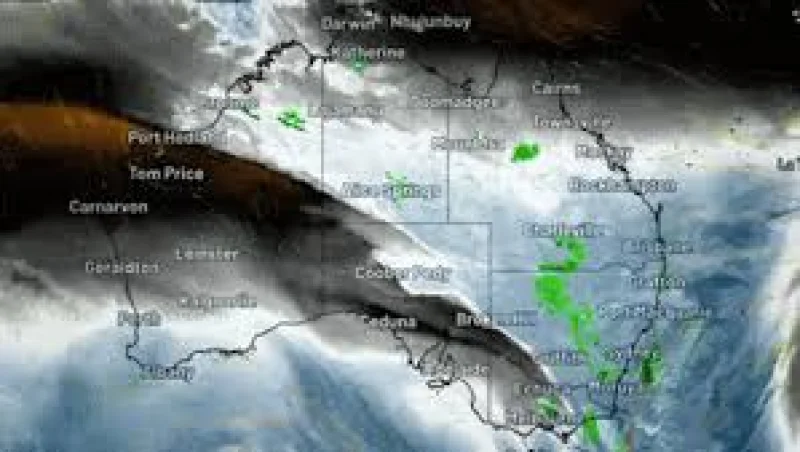
The weather system is a large north-west cloudband stretching from the Kimberley in Western Australia to south-east Queensland and further into the Tasman Sea, where it collided with a coastal trough. That combination is why the rain has been so widespread for May and why Brisbane’s weather is expected to stay bleak until Tuesday afternoon. The immediate question for commuters and councils is no longer whether the rain will continue, but how much more the Gold Coast hinterland takes before the low finally clears offshore.