
Ricardo Pepi has chosen the United States, ending a long national-team crossroads that had also taken him through youth processes with Mexico. The forward, who grew up in El Paso, Texas, said it plainly: “Soy orgullosamente mexicoamericano.”
The timing gives the decision extra weight. Pepi is now set to arrive at the World Cup defending the United States, and his choice lands as national-team rosters are still being shaped by players who can move between systems, countries and identities before the biggest stage begins.
Pepi’s path makes that decision easy to see in football terms. He was formed at FC Dallas, one of the American clubs that has built a pipeline of talent for the men’s game, then took his career to Europe with Augsburg, Groningen and PSV Eindhoven. By the time he had to decide, he had already lived in both soccer worlds that pulled at him.
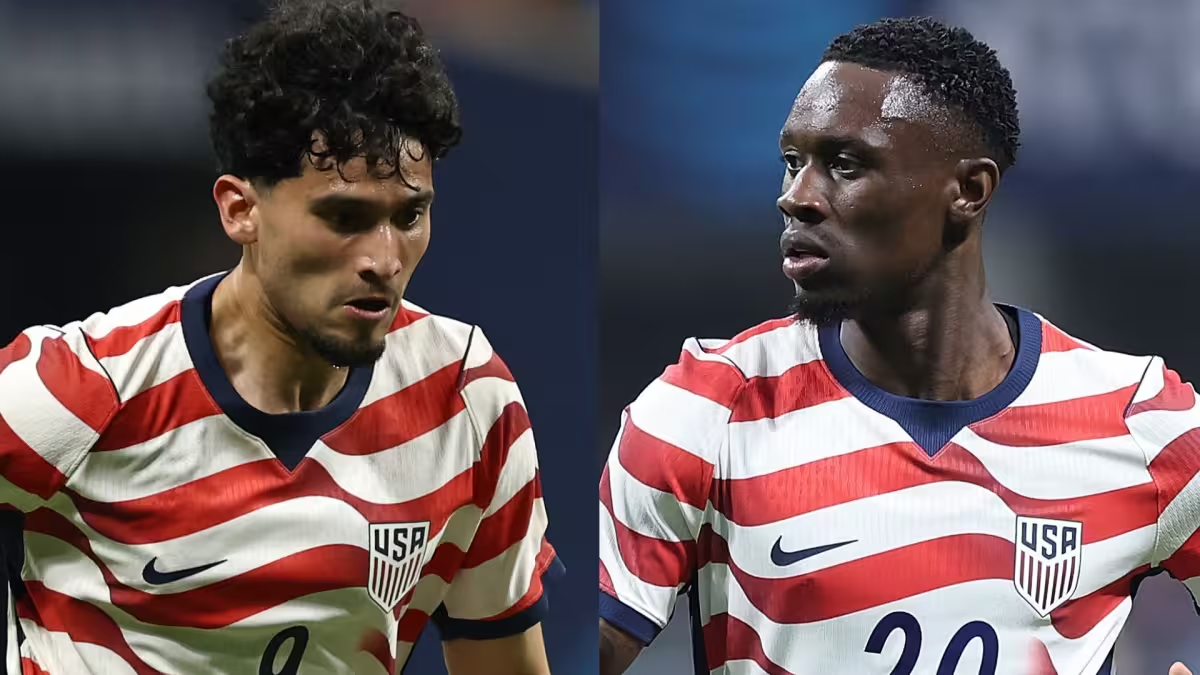
That is where the friction sits. Pepi did have youth ties to Mexico, and that connection was real enough to be part of his development. But when the choice became final, he went with the country where he grew up and the national setup he will now represent on the sport’s biggest stage.
His decision also fits a larger pattern in North America, where MLS academies have become a proving ground for players who can influence national-team talent pools on either side of the border. Pepi is one of the clearest examples of that system at work: built in the United States, tested in Europe, and now committed to the U.S. as the World Cup approaches.
For the United States, that means another attacker who already carries experience beyond MLS and another answer in a contest that has long included Mexico. For Pepi, it means the question that followed him through youth football is settled, and the next judgment will come where it matters most, in games that count for the United States at the World Cup.