Climate talks at Cop31 in Turkey stalled on Saturday night as negotiators ran into a deadlock over whether the final agreement should mention a transition away from fossil fuels. The summit had already overrun by evening, and countries were left facing a showdown over the wording that could decide the shape of the deal.
The pause matters because the dispute is not just about language. A loose coalition of about 130 countries wants the final outcome to include a reference to moving away from fossil fuels, while Saudi Arabia and some other oil-rich nations have consistently opposed an explicit statement on fossil fuel use. At the same time, developing countries want stronger rights to funding from the rich world to help them cope with worsening climate impacts, making the talks about both emissions and money at once.
Throughout Saturday, Chris Bowen and Murat Kurum held meetings with scores of countries as the pressure built around the summit text. By late Saturday night, there was still no resolution. In the early hours on Sunday, a third draft of a possible headline agreement was released, and it tried to keep the talks moving by recalling the deal reached in Dubai three years ago, the only summit where countries agreed on the need to move away from burning coal, oil and gas.

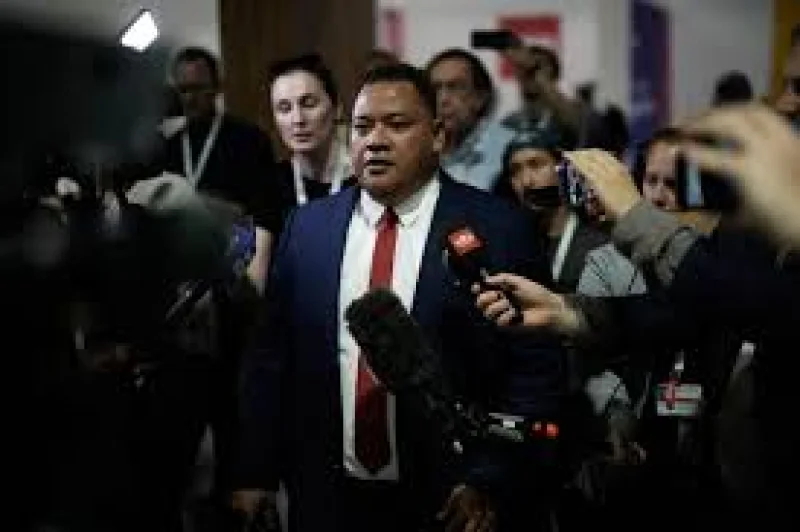
Maina Talia made clear that for Tuvalu, the fossil fuel reference is not a bargaining chip. He said it is a red line, and that without it, the countries pressing for stronger language would be wasting their time. That stance underlines how much is at stake for smaller and more vulnerable states, which see the wording as a measure of whether the world is still willing to name the cause of the crisis plainly.
The third draft also dropped a hard target for carbon capture and storage, even as it acknowledged that as much electrification as possible must be powered by clean energy. That change matters because Saudi Arabia has wanted stronger recommendations on the technology, while other countries object to it as a way of prolonging the fossil fuel industry. For the same reason, the draft has not settled the deeper fight over whether the final text will only nod toward cleaner power or plainly commit to stepping away from fossil fuels.
The third draft was due to be debated in a formal plenary session at 9am local time, with the summit still carrying the weight of unfinished business from the previous day. Nick Dearden blamed fossil fuel interests and rich countries’ failure to deliver promised finance for the lack of progress, while Harjeet Singh said developing countries cannot be asked to transform their economies while they are drowning in data that is cut off in the source text. The next move is now simple and stark: either the plenary lands on wording that preserves the fossil fuel transition, or the deadlock stays on the record as the moment the summit ran out of room to compromise.