Week-long talks at the UN in Geneva collapsed just before 5am on Saturday after states failed to agree a negotiating mandate for a legally binding treaty on autonomous weapons. Instead of opening the door to a new pact, the conference settled for a weaker text that asks countries to elaborate by consensus.
The breakdown matters because more than 100 states had pushed for a stronger line while the process itself gave every one of the 128 parties to the convention veto power over any statement. That meant broad support was not enough. One objection could still stop the room, and Russian resistance did exactly that after all-night negotiations failed to move it.
The talks were held at the Review Conference on Conventional Weapons, where governments have spent years circling the same question: whether AI-driven systems should be left to military discretion or brought under a binding legal rule. The CCW has not passed a new law regulating weapons in the past 30 years, which is why this round drew unusual urgency from states that wanted to move beyond discussion and into law.

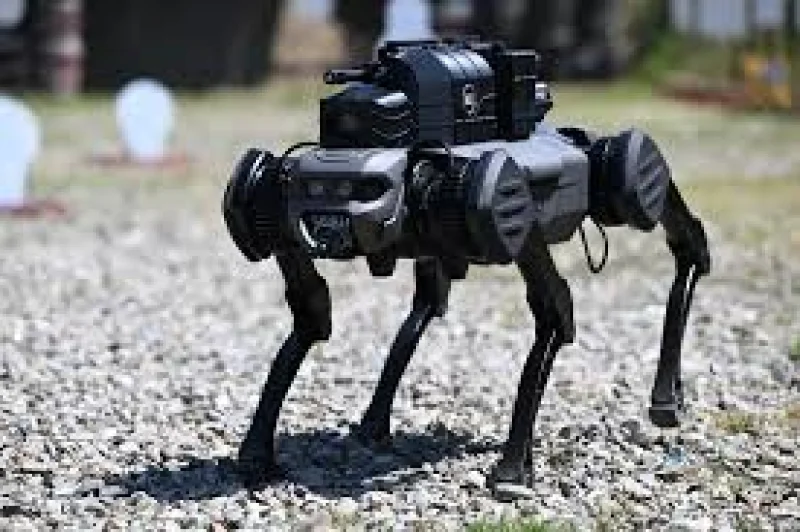
Max Tegmark said the stakes had already arrived. “Slaughterbots are already here,” he said, adding that states had agreed it was enough to keep talking about the issue for the 14th year. His warning captured the divide in the room: European and Nato states, including Ukraine, as well as China and Iran, said they were willing to back a new protocol, while the US remained reluctant and South Korea, Japan, Turkey, the UK, France and Germany were among those resisting being bound by a new law.
That same structure has slowed the issue for years. Because consensus is required, the CCW can produce a statement only if all 128 parties agree, and diplomats inside the talks said Russia was deliberately filibustering rather than negotiating in good faith. The exclusion of several nonmember countries also triggered a rare protest in the chamber on the final day, when the Egyptian delegation shouted at the conference chair.
The result leaves the forum where it started: able to keep the discussion alive, but unable to force a binding outcome. States have found other routes before, including the 2008 ban on cluster munitions, but this week’s collapse shows that a clear majority can still be stopped when one party holds the procedural brake. Unless governments decide to take the fight elsewhere, autonomous weapons remain regulated by argument, not law.