A Caltech-led analysis of 257 black hole mergers has found a striking concentration of black holes at 10 solar masses, along with a missing band from 12 to 16 solar masses. The pattern, drawn from 10 years of gravitational-wave detections, suggests some black holes may form in a separate way from the rest.
That matters now because the LIGO–Virgo–KAGRA network has already spotted more than 300 black hole collisions, giving researchers a growing sample to test how these objects are born. In this study, three-quarters of the mergers sat at 10 solar masses, a result that makes the keyword search for supernova explosion physics more than academic.

Lead author Isaac Legred said the group keeps seeing 10 solar-mass black holes merge and wondered why 14 solar-mass black holes are so rare. Katerina Chatziioannou put the result more bluntly, saying the vast majority of merging black holes are about 10 times the mass of the Sun and may share a common origin as a distinct subpopulation that failed to go supernova. The paper was published in Physical Review D, and former Chatziioannou lab member Jacob Golomb was also an author.
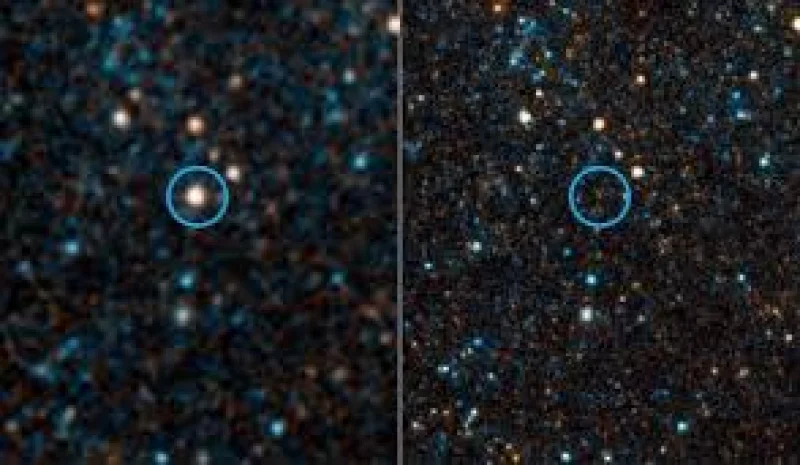
The mass gap is the clue. If black holes formed from the ordinary deaths of massive stars, the distribution would not be expected to bunch so hard at one point while leaving a clean gap in the middle. The data instead fit a picture in which some stars collapse inward without a supernova explosion, leaving behind black holes around 10 solar masses. That would explain the 10-solar-mass peak and the shortage in the 12 to 16 solar-mass range, but it is still only an indirect fit. No concrete examples of failed supernovae have been confirmed, and the study did not find direct evidence for them.
That leaves the result in an awkward but useful place: strong enough to match a long-running theory, not strong enough to close it. The LIGO–Virgo–KAGRA network, which combines detectors in Louisiana and Washington with Virgo in Italy and KAGRA in Japan, is now giving astronomers a way to read stellar death through gravitational waves rather than light. For Chatziioannou, that is the point. As she put it, the data are beginning to connect gravitational-wave measurements with the astrophysics underneath them, even if the exact internal physics behind the 10-solar-mass peak is still the question the next round of mergers will have to answer.