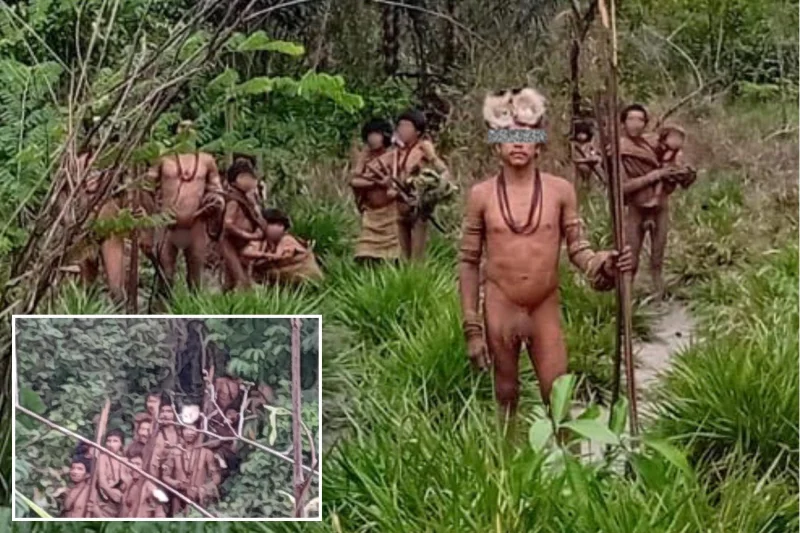
Roughly 20 Awá Indigenous people walked up to a government outpost in the Amazonian village of Tawari on Monday and asked for yams, a rare contact that ended with them taking food and returning to their territory. For a group that has long kept its distance from outsiders, the brief encounter was a stark sign that the forest around them is under strain.
The Awá are among the most threatened tribes on Earth and remain one of the last uncontacted peoples. Survival International says their territory has been worn down over the years by illegal logging, hunters and cattle ranchers, while the Awá themselves are known to rely on hunting and gathering, using bows and arrows to hunt armadillos and collect wild honey and babassu nuts.

The territory at the center of the alarm is vast on paper but shrinking in practice. The Arariboia Indigenous Territory covers roughly 1.2 million acres, yet the way Caroline Pearce describes it, the people inside are being squeezed into an ever-smaller island of the Amazon rainforest surrounded by destruction. She said the encounter showed how the continued invasion of uncontacted peoples’ forests puts otherwise self-sufficient Indigenous people in real danger.
That contradiction is what makes the Monday visit so unsettling. The Awá are described as isolated and self-sufficient, and the Guajajara say the Awá way of life depends exclusively on hunting and gathering, yet roughly 20 of them came to outsiders for food. The same Guajajara also say climate change, fires, deforestation and land encroachment are hitting Awá lands and daily life directly, while the Forest Guardians have worked to protect them from encroachment even at the cost of losing warriors in battle.
Sarah Shenker called the episode a crisis moment and a wake-up call. Pearce said the Brazilian government must commit the resources necessary to protect Arariboia from loggers and ranchers, a demand that underscores the next test: whether the response will be stronger protection on the ground or another warning that the forest around the Awá is giving way faster than it can be defended.