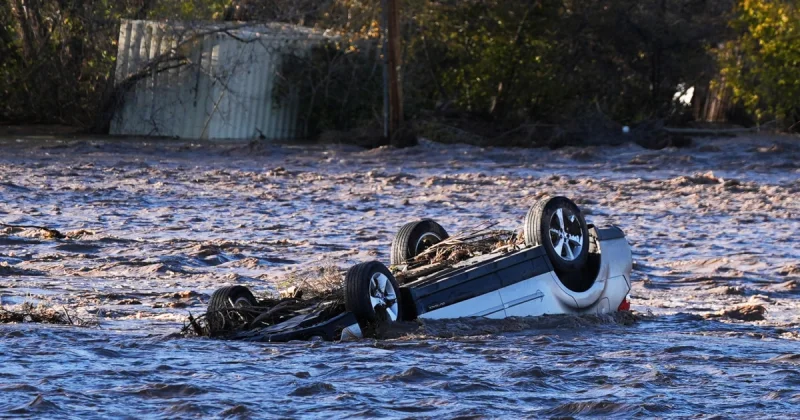
Severe weather turned Election Day into a moving target in parts of the United States, forcing election officials to move polling locations after flash flooding, heavy rain and tornadoes made some sites unsafe. In Florida alone, at least 21 polling locations were moved across eight counties as roads along the Atlantic coast became impassable and voters were told to go elsewhere.
For Jessica Rendon, the problem was not just the weather. The Port St. Lucie resident said she spent hours trying to cast her ballot after flooding left highways waterlogged and shut polling places, and she said she only learned her location had changed from another resident who was also trying to vote. That is why wdbj7 and other election-day storm disruptions matter now: they are not an abstract access issue, but a same-day obstacle for people trying to vote before the polls close.

The Florida counties affected were Brevard, Broward, Highlands, Indian River, Martin, Okeechobee, Palm Beach and St. Lucie. Officials were dealing with a storm that dumped as much as 22 inches of rain in 24 hours, and a flood watch remained in effect in some parts of Florida even as rainfall rates slowed. The weather also kept spreading, with severe storms moving across Oklahoma, Texas and Arkansas overnight and forecasters warning of possible flash flooding on Tuesday in parts of Alabama, Tennessee, Arkansas and Mississippi.
Other states faced their own emergency fixes. A tornado on Sunday with peak winds of about 100 mph forced Cimarron County officials to change one polling location after it damaged the Keyes Community Center, snapping tree branches, damaging the roof and collapsing a wall. In the Four Corners region, Utah Lt. Gov. Deidre M. Henderson declared a state of emergency and allowed voters registered in San Juan County who were isolated by floodwaters to request and return ballots electronically, while the Colorado secretary of state allowed voters in La Plata and Archuleta counties to vote online.
Rendon said, “I personally did not see one officer out in public helping any of us out,” and added, “Voting or not voting.” Her frustration captured the gap between emergency plans on paper and what some voters were living through in real time. Brad Gomez, who has studied election turnout, said intense rain can push participation lower, with turnout falling about eight-tenths of 1 percentage point for every inch of rain above a county’s average in research spanning 1948 to 2000. The storm system was still moving east, and the next question was not whether officials had adapted, but how many voters had already been delayed or turned away before the day was over.