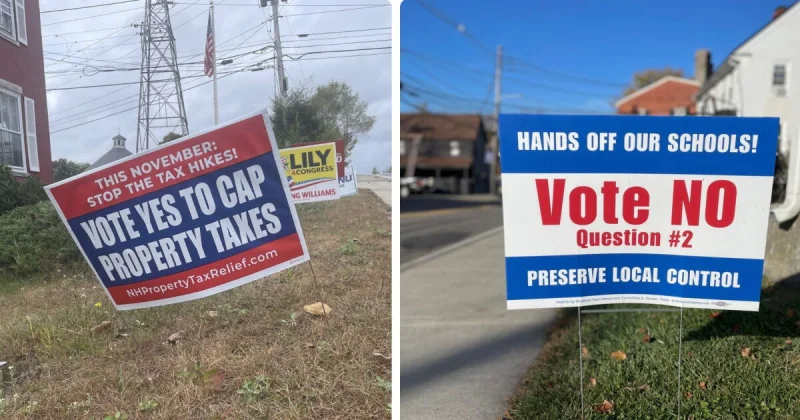
New Hampshire voters will decide Tuesday whether to cap future increases in local school taxes, a move that would go into effect only in communities that choose to adopt it. Question 2 needs 60% support to pass, putting a narrow threshold on one of the most closely watched items on the ballot.
The measure is being put before voters in every town and city, but it is not a statewide cap. If approved, it would control how quickly school taxes rise in places that opt in, not freeze them across New Hampshire. That distinction matters because the question is being sold as relief, yet it would not lower a person’s property tax bill or stop that bill from going up over time.

That is why supporters have leaned on projections meant to show how much a cap could save. Republican lawmakers created an online calculator based on a 3% inflation rate, a community’s existing school tax rate and an annual 6% increase in school spending. Under that model, the owner of a $687,000 home in Londonderry would save $1,969 over five years, while the owner of a $304,300 home in Manchester would save $732.
At the Legislature, Ross Berry said the annual town meeting process is inherently broken and is being intentionally manipulated. He described the ballot measure as what supporters see as the solution to that manipulation. His argument reflects the broader push behind Question 2: to move school tax decisions away from local budget meetings and into a statewide vote.
But the promise of tax relief sits beside a harder reality. Supporters say the cap would not require cuts to staff, extracurricular activities or classes that affect students, and that school districts could trim the superintendent’s administrative budget if they need to meet the limit. Opponents warn the opposite, saying the measure could lead to devastating school budget cuts. What happens next depends on Tuesday’s vote, and on whether enough communities decide to live under the cap that is on offer.