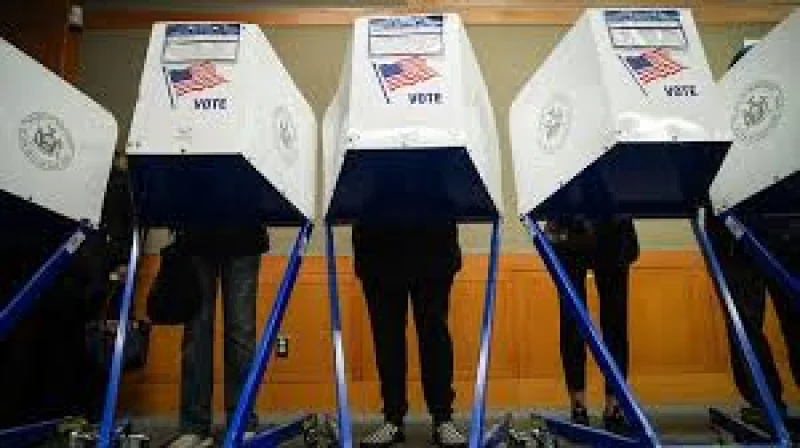
There is no simple answer to when US voters will know the results of the midterms. Counting starts locally, rules vary by state, and that means some races can be called quickly while others stay unresolved for many hours, days or even weeks.
The reason people are asking when do they start counting votes now is simple: this year, all 435 members of the House of Representatives, 33 Senate seats and the governor’s offices of 36 states are on the ballot. In a cycle that large, even small delays in tabulating ballots can shape what voters think is happening before the final result is known.
In some places, paper ballots are tabulated by machines and the results are uploaded in batches. In others, mail ballots that arrive on election day may already be processed and released soon after polls close, often about an hour later. Many millions of voters also cast ballots by mail, and some states count those ballots for days after election day as long as they were postmarked by then. A few states send mail ballots to all voters, while others require a request. Curing periods can add more time, because they give voters a chance to provide missing information or verify a signature so the ballot can count.

That is why the slowest places are usually the ones with broader voting access rules, larger populations, or both. MIT’s Election Data and Science Lab noted in 2024 that even the slowest-counting states had tabulated a majority of their votes within about eight hours, and all but California had counted more than 75% of votes after two days. But that still leaves a gap between the first batch of unofficial numbers and the final count, especially where curing ballots are the last to be tabulated.
That gap matters because races are not final until they are canvassed and certified by local authorities. If a contest falls within a very narrow margin, usually a fraction of a percent, it can trigger an automatic recount under state or local laws and delay the outcome further. News organizations, most notably the, may predict a winner from early unofficial returns, but they usually do not call a race if it is inside the automatic recount margin even when the early numbers point one way.
The friction is that the first numbers can look decisive long before they are secure. Results often arrive in batches, and a candidate can appear to be ahead before mail ballots, curing ballots, audits or a recount change the picture. That is why Donald Trump’s 2020 rejection of the results of his loss, and of other elections when he has not liked the outcome, still hangs over the way close counts are read now.
So the real answer is not a clock time. It is a sequence: ballots are cast, batches are uploaded, local officials canvass the results, and only then are they certified. For most races that will happen fast enough to satisfy a television graphic; for the tightest ones, the final winner may not be clear until the process has done its work.